
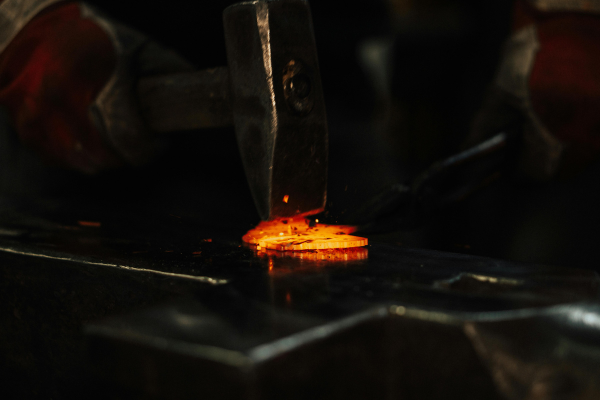
Steel competes with aluminum, engineering plastics, fiber-reinforced composites, titanium, engineered wood, and concrete across a wide range of industrial applications.
Choosing between these materials is rarely as simple as comparing strength, weight, or price per kilogram.
A lightweight material may reduce the mass of a component but require a larger cross-section to achieve the same stiffness. A corrosion-resistant material may reduce maintenance costs but introduce manufacturing or joining difficulties. A material with a higher purchase price may offer lower lifetime costs if it improves durability or operating efficiency.
Steel remains widely used because it combines mechanical performance, established manufacturing processes, broad availability, standardized grades, and extensive recycling infrastructure. Nevertheless, competing materials can offer substantial advantages when their properties match the requirements of a particular application.
The central engineering question is not whether steel is universally better than its alternatives.
It is which material can deliver the required function, safety, durability, manufacturability, and environmental performance at the most appropriate total cost.
This guide compares steel with its principal competitors, explains the limitations of common material-property comparisons, and demonstrates how engineers and industrial buyers can evaluate alternative designs using transparent calculations.
Editorial reference date: October 10, 2026. Numerical design and cost examples are hypothetical and intended to demonstrate engineering principles. They are not certified designs, market quotations, or substitutes for applicable engineering codes.
1. Why Materials Compete in Industrial Applications
Material substitution occurs when a different material can satisfy the same functional requirements while offering a measurable advantage.
The motivation may involve weight reduction, corrosion resistance, electrical insulation, production efficiency, environmental performance, or cost.
For example, an automotive manufacturer may investigate aluminum or advanced high-strength steel to reduce vehicle mass.
A chemical equipment manufacturer may compare stainless steel with polymer-lined carbon steel or reinforced thermoplastics.
A building designer may evaluate structural steel, reinforced concrete, or engineered timber.
Each decision involves a different combination of constraints.
The functional-equivalence principle
Materials should be compared in components that perform equivalent functions.
A comparison is meaningful only when the alternatives satisfy the same relevant requirements, including:
- Applied loads and load combinations.
- Maximum allowable deformation.
- Fatigue life.
- Operating temperature.
- Corrosion exposure.
- Impact and damage tolerance.
- Manufacturing tolerances.
- Safety factors.
- Service life.
- Applicable standards.
Comparing one kilogram of steel with one kilogram of aluminum does not establish which material produces the better component.
The required quantity of each material may be different.
2. The Principal Competitors of Steel
Steel competes with several material families, each containing many grades and product forms.
Aluminum alloys
Aluminum offers low density, useful corrosion resistance, and established forming, casting, extrusion, and joining processes.
It is widely used in transportation, aerospace, packaging, electrical systems, and industrial equipment.
Its principal limitation in many stiffness-controlled applications is a substantially lower elastic modulus than steel.
Engineering plastics
Thermoplastics such as polyamide, polycarbonate, acetal, and polypropylene offer design flexibility and low density.
Their performance depends strongly on polymer chemistry, reinforcement, temperature, loading duration, and environmental exposure.
They are frequently selected for housings, tanks, fittings, gears, and nonmetallic components.
Fiber-reinforced composites
Glass-fiber and carbon-fiber composites combine reinforcing fibers with a polymer matrix.
Their properties depend on fiber type, orientation, volume fraction, laminate configuration, and manufacturing quality.
They can provide excellent performance in carefully designed lightweight structures but may involve higher manufacturing and inspection complexity.
Titanium alloys
Titanium offers a combination of corrosion resistance, relatively low density compared with steel, and useful mechanical properties.
Its higher material and processing costs generally restrict its use to applications where these advantages justify the expense.
Engineered wood
Cross-laminated timber, laminated veneer lumber, and glued laminated timber are important alternatives in certain building systems.
Their structural behavior depends on grain direction, moisture, connection design, fire exposure, and applicable building standards.
Concrete
Concrete competes with steel in many structural systems, although the two materials are also frequently used together.
Concrete performs particularly well in compression, while reinforcement or prestressing is often needed to address tensile stresses.
3. Understanding the Properties That Matter
A reliable comparison begins with the relevant material properties.
Density
Density determines the mass associated with a given volume.
Lower density is valuable in weight-sensitive applications, but it does not independently establish structural efficiency.
Elastic modulus
Young’s modulus describes elastic stiffness under appropriate loading conditions.
A material with a higher modulus generally experiences less elastic strain under the same uniaxial stress.
Yield strength
Yield strength identifies the stress associated with the onset of specified plastic deformation in applicable metallic materials.
It should not be used indiscriminately for brittle materials, polymers, or anisotropic composites.
Tensile strength
Ultimate tensile strength describes the maximum engineering stress achieved during a specified tensile test.
Its interpretation differs among ductile metals, polymers, and composite laminates.
Toughness
Toughness relates to energy absorption before fracture.
Impact performance and fracture toughness require specific tests and should not be inferred solely from tensile strength.
Fatigue resistance
Fatigue performance depends on cyclic stress, geometry, surface condition, manufacturing defects, environment, and load history.
A general ranking of materials as having high or low fatigue resistance is usually insufficient for engineering design.
4. Comparative Material Properties
The following values are approximate reference ranges or representative values intended for preliminary screening.
They are not guaranteed design properties.
| Material family | Typical density (g/cm³) | Approximate elastic modulus |
|---|---|---|
| Carbon and low-alloy steels | 7.7–7.9 | 200–210 GPa |
| Aluminum alloys | 2.6–2.8 | 68–72 GPa |
| Titanium alloys | 4.4–4.6 | 100–120 GPa |
| Unreinforced engineering thermoplastics | Approximately 0.9–1.5 | Often approximately 1–4 GPa |
| Carbon-fiber polymer composites | Approximately 1.4–1.8 | Strongly dependent on laminate direction and architecture |
| Structural softwood | Species- and moisture-dependent | Strongly direction-dependent |
| Normal-weight concrete | Approximately 2.3–2.5 | Mix- and strength-dependent |
The values are broad engineering orientation data. Individual materials may fall outside these ranges.
Why composite modulus needs special treatment
A carbon-fiber composite can have very high stiffness along the fiber direction but substantially different properties transverse to the fibers.
A single elastic modulus cannot describe every loading direction of an anisotropic laminate.
Why strength is not shown as one universal comparison
Yield strength is appropriate for many metallic design calculations, but it does not provide an equivalent failure criterion for all material families.
For meaningful design, engineers should use the relevant material-specific properties and failure criteria.
5. Strength-to-Weight Ratio and Specific Strength
Specific strength expresses a strength measure relative to density.
For a defined material and test condition:
Specific strength = Strength ÷ Density
This can be useful when comparing materials for weight-sensitive, strength-controlled components.
However, the comparison must use compatible strength definitions.
Important limitations
High specific strength does not guarantee the lowest-mass component.
Buckling, stiffness, fatigue, joints, impact resistance, and manufacturing constraints may govern the design.
A high-strength material may also require specialized forming or joining methods.
6. Stiffness-to-Weight Ratio and Specific Modulus
Specific modulus is the elastic modulus divided by density.
Specific modulus = Elastic modulus ÷ Density
It is useful for preliminary material screening in certain stiffness-controlled applications.
Consider representative values:
- Steel: 210 GPa and 7,850 kg/m³.
- Aluminum: 70 GPa and 2,700 kg/m³.
The ratios are approximately:
- Steel: 210 ÷ 7,850 = 0.0268.
- Aluminum: 70 ÷ 2,700 = 0.0259.
The numerical units are equivalent when calculated consistently.
These results show that steel and aluminum can have relatively similar specific elastic modulus values despite their very different densities.
What this means
Replacing a steel component with aluminum does not automatically produce a proportional reduction in mass when elastic stiffness must remain unchanged.
The achievable weight saving depends on geometry and loading.
7. Quantitative Example: Steel and Aluminum in Axial Tension
Consider two hypothetical straight bars under an axial tensile load of 50 kN.
Both have:
- Length: 1.0 m.
- Cross-sectional area: 500 mm².
- Identical applied axial force.
- Linear-elastic behavior.
Assume:
- Steel modulus: 210,000 MPa.
- Aluminum modulus: 70,000 MPa.
Axial stress
Stress = Force ÷ Area
50,000 N ÷ 500 mm² = 100 MPa
Both bars experience the same nominal axial stress.
Steel elongation
Elongation = Force × Length ÷ (Area × Modulus)
50,000 × 1,000 ÷ (500 × 210,000)
= 0.476 mm
Aluminum elongation
50,000 × 1,000 ÷ (500 × 70,000)
= 1.429 mm
Interpretation
With the same dimensions and load, the aluminum bar elongates approximately three times as much as the steel bar.
However, the aluminum bar is substantially lighter.
The engineering decision depends on whether the additional deformation is acceptable.
If both bars must meet the same elongation limit, their required cross-sectional areas may differ.
This example considers axial stiffness only. It does not establish adequacy against yielding, buckling, fatigue, or connection failure.
8. Quantitative Example: Equal Axial Stiffness
Now assume the steel bar has a cross-sectional area of 500 mm².
To achieve approximately the same axial stiffness with aluminum at the same length:
Aluminum area = Steel area × Steel modulus ÷ Aluminum modulus
500 × 210 ÷ 70 = 1,500 mm²
The aluminum bar requires approximately three times the cross-sectional area.
Steel mass
Volume:
500 mm² × 1,000 mm = 500,000 mm³
This equals 0.0005 m³.
Mass:
0.0005 × 7,850 = 3.925 kg
Aluminum mass
Volume:
1,500 mm² × 1,000 mm = 1,500,000 mm³
This equals 0.0015 m³.
Mass:
0.0015 × 2,700 = 4.050 kg
Result
| Parameter | Steel | Aluminum |
|---|---|---|
| Cross-sectional area | 500 mm² | 1,500 mm² |
| Length | 1,000 mm | 1,000 mm |
| Approximate mass | 3.925 kg | 4.050 kg |
| Axial stiffness | Equivalent | Equivalent |
Under these specific assumptions, aluminum does not produce a mass reduction.
This is not a universal result for structural components.
In bending, alternative cross-sectional geometries can change the outcome substantially.
9. Why Geometry Changes Material Comparisons
Material selection and component design are inseparable.
For a beam in bending, stiffness depends on the elastic modulus and the second moment of area.
Flexural rigidity = E × I
Where:
- E is Young’s modulus.
- I is the second moment of area of the cross-section.
A lower-modulus material can sometimes compensate through a more efficient geometry.
Example: Extruded aluminum profiles
Aluminum extrusion can produce complex hollow sections with material distributed away from the neutral axis.
This may improve bending stiffness relative to mass.
Example: Formed steel sections
Roll-formed steel profiles can also achieve high structural efficiency through carefully designed cross-sections.
The correct comparison is therefore between optimized components, not merely between material-property values.
10. Steel Versus Aluminum in Automotive Applications
Automotive lightweighting illustrates the importance of system-level engineering.
Manufacturers may use:
- Mild steel.
- Advanced high-strength steel.
- Press-hardened steel.
- Aluminum sheet.
- Aluminum castings.
- Aluminum extrusions.
- Polymer composites.
- Hybrid structures.
Advantages of steel
Steel offers established stamping, welding, joining, coating, and repair processes.
Advanced high-strength grades can improve strength-to-mass performance in appropriately designed components.
Advantages of aluminum
Aluminum can reduce mass in suitable body panels, castings, and structural systems.
Its low density can be particularly valuable when geometry and manufacturing methods are optimized for the material.
Design challenges
Aluminum substitution may require:
- Different section dimensions.
- New joining methods.
- Galvanic corrosion protection.
- Different forming procedures.
- Changes in crashworthiness validation.
- New repair and inspection practices.
Crash performance
Crashworthiness depends on structural geometry, load paths, material behavior, joining integrity, and deformation mechanisms.
A material’s tensile strength alone does not determine crash performance.
11. Steel Versus Plastics in Industrial Equipment
Polymers can replace steel in many components where high structural loads are not the governing requirement.
Examples include:
- Equipment housings.
- Protective covers.
- Tanks.
- Fluid-handling components.
- Cable supports.
- Bushings.
- Electrical enclosures.
Potential advantages
Engineering plastics can provide low weight, corrosion resistance, electrical insulation, and design flexibility.
Injection molding can also integrate multiple functions into a single component.
Technical limitations
Polymer behavior may depend strongly on temperature, loading duration, moisture, and chemical exposure.
Creep
Creep is time-dependent deformation under sustained load.
A polymer component may satisfy an initial static strength test but experience unacceptable deformation during long-term service.
Temperature
Elastic modulus and strength can change significantly with operating temperature.
Design calculations must use properties appropriate to the actual service conditions.
Reinforcement
Glass-fiber reinforcement can improve stiffness and strength, but also introduces anisotropy and processing considerations.
12. Steel Versus Carbon-Fiber Composites
Carbon-fiber-reinforced polymers can provide exceptional performance in weight-sensitive applications.
Their advantages are strongest when the structure is designed around the directional behavior of the fibers.
Potential advantages
- High directional stiffness.
- High directional strength.
- Low structural mass in suitable designs.
- Resistance to many corrosive environments.
- Tailored laminate architecture.
Limitations
- High material and processing costs.
- Complex damage detection.
- Impact sensitivity.
- Repair challenges.
- Joining requirements.
- Temperature limitations associated with the matrix.
- End-of-life processing complexity.
Composite failure modes
Engineers must consider:
- Fiber failure.
- Matrix cracking.
- Delamination.
- Interlaminar shear.
- Impact damage.
- Environmental degradation.
These failure mechanisms differ substantially from the yielding and fracture behavior of many steels.
13. Steel Versus Titanium
Titanium alloys are important where corrosion resistance, strength-to-weight performance, and specialized service requirements justify their cost.
Typical applications include aerospace components, chemical processing equipment, medical devices, and selected marine systems.
Advantages of titanium
- Useful corrosion resistance in many environments.
- Lower density than steel.
- Attractive properties in selected high-performance applications.
- Biocompatibility of appropriate medical grades.
Limitations
- Higher material cost.
- More demanding machining conditions.
- Specialized welding and contamination controls.
- Potentially longer procurement lead times.
Important distinction
Titanium is not automatically more wear-resistant, fatigue-resistant, or economical than steel.
Performance depends on the selected grades, surface condition, operating environment, and component design.
14. Steel Versus Concrete in Construction
Steel and concrete are often complementary rather than direct substitutes.
Structural steel systems can offer high prefabrication potential and relatively lightweight structural members.
Reinforced concrete systems can provide useful compressive performance, stiffness, thermal mass, and fire-related advantages when properly designed.
Structural steel considerations
- Member buckling.
- Connection design.
- Fire protection.
- Corrosion protection.
- Fabrication tolerances.
- Erection logistics.
Reinforced concrete considerations
- Concrete strength.
- Reinforcement requirements.
- Creep and shrinkage.
- Cracking.
- Construction sequence.
- Curing.
- Foundation loads.
Correct comparison
A steel frame and a reinforced concrete frame should be evaluated for the same building function, loads, serviceability requirements, design life, and applicable regulations.
Comparing material price per tonne is insufficient.
15. Steel Versus Engineered Timber
Engineered timber has expanded the range of structural wood applications.
Products such as CLT and glulam can support prefabricated building systems.
Potential advantages
- Low material density.
- Prefabrication opportunities.
- Renewable feedstock under appropriate forestry management.
- Potentially favorable environmental performance in suitable applications.
Technical considerations
- Moisture control.
- Connection behavior.
- Directional properties.
- Fire design.
- Biological degradation.
- Acoustic performance.
- Long-term deformation.
Material-specific design
Engineered timber should be evaluated using its relevant product standards, grade properties, connection systems, and moisture exposure conditions.
It should not be treated as mechanically interchangeable with steel.
16. Fatigue and Repeated Loading
Fatigue is critical in vehicles, trailers, cranes, machinery, and industrial equipment.
Repeated loading can produce progressive damage even when the maximum applied stress is below a material’s monotonic tensile strength.
Steel
Fatigue performance depends on grade, weld details, stress concentrations, residual stresses, corrosion, and surface quality.
Aluminum
Fatigue design requires careful consideration of cyclic stress and joint details.
General assumptions about a universal endurance limit should be avoided.
Composites
Fatigue behavior depends on laminate design, loading direction, matrix properties, and damage accumulation.
Engineering rule
Use material- and detail-specific fatigue data under representative loading and environmental conditions.
17. Corrosion and Environmental Durability
Corrosion resistance is frequently a reason for material substitution.
However, corrosion performance is environment-specific.
Carbon steel
Carbon steel may require protective coatings, galvanizing, corrosion allowances, or other measures.
Stainless steel
Stainless steels can offer strong corrosion resistance in appropriate environments, but are not immune to localized corrosion or stress corrosion cracking.
Aluminum
Aluminum forms a protective oxide layer, although certain environments can cause pitting or other corrosion mechanisms.
Titanium
Titanium offers excellent corrosion resistance in many applications, but material suitability still requires verification.
Polymers and composites
These materials do not undergo conventional metallic rusting, but can degrade through ultraviolet exposure, chemicals, moisture, temperature, or mechanical aging.
Galvanic corrosion
Joining dissimilar metals may create galvanic corrosion risks when an electrolyte and an electrical connection are present.
Design should address isolation, coatings, drainage, and appropriate material combinations.
18. Wear and Abrasion Resistance
Wear resistance is essential in agricultural equipment, mining machinery, bulk-material handling, and earthmoving systems.
Steel grades designed for abrasion resistance can provide important advantages.
However, material hardness alone does not fully determine service life.
Factors influencing wear
- Abrasive particle hardness.
- Particle size.
- Impact energy.
- Sliding speed.
- Contact pressure.
- Temperature.
- Corrosion.
- Component geometry.
Material alternatives
Possible alternatives include abrasion-resistant steel, hardfacing, ceramics, elastomers, and replaceable polymer liners.
The appropriate solution depends on the actual wear mechanism.
Avoid unsupported performance claims
A claim that one material lasts twice as long as another should be supported by comparable service conditions or controlled testing.
19. Manufacturing Processes and Production Readiness
A material may be attractive on paper but difficult to manufacture using existing equipment.
Steel processing
Common methods include:
- Rolling.
- Stamping.
- Cutting.
- Welding.
- Machining.
- Heat treatment.
- Coating.
Aluminum processing
Common methods include:
- Extrusion.
- Casting.
- Forming.
- Machining.
- Welding.
- Mechanical joining.
Polymer processing
Common methods include:
- Injection molding.
- Extrusion.
- Thermoforming.
- Compression molding.
- Additive manufacturing.
Composite processing
Depending on the system:
- Hand layup.
- Resin infusion.
- Prepreg processing.
- Automated fiber placement.
- Compression molding.
- Pultrusion.
Production economics
The best material choice must consider tooling, cycle time, scrap, inspection, process capability, labor, and production volume.
20. Joining and Assembly Costs
Material substitution frequently changes the joining process.
Steel components may be welded, bolted, riveted, bonded, or mechanically interlocked.
Aluminum and composites may require different procedures and joint geometries.
Hidden costs
A material substitution may introduce:
- New fixtures.
- Specialized fasteners.
- Surface preparation.
- Adhesive curing.
- Additional quality controls.
- New inspection procedures.
- Operator training.
- Corrosion isolation.
These costs should be included in the business case.
Hybrid structures
Hybrid steel–aluminum or metal–composite designs can be effective when each material is used where it provides the greatest functional benefit.
However, joining integrity and differential thermal expansion must be considered.
21. Why Price per Kilogram Can Be Misleading
Raw material prices are often quoted per kilogram or tonne.
This is useful for purchasing but insufficient for comparing finished components.
Example
Assume two hypothetical materials:
- Steel: US$1.20/kg.
- Aluminum: US$3.00/kg.
The aluminum price is 2.5 times the steel price per kilogram.
However, suppose two optimized components meeting the same functional requirements have masses of:
- Steel component: 10 kg.
- Aluminum component: 5 kg.
Material cost
Steel:
10 × US$1.20 = US$12.00
Aluminum:
5 × US$3.00 = US$15.00
The aluminum component has a material cost only US$3 higher, despite the much larger difference in price per kilogram.
Interpretation
The remaining decision depends on fabrication, assembly, performance, operating savings, maintenance, and end-of-life value.
The hypothetical masses must be supported by engineering design; they cannot be assumed from density alone.
For a complementary discussion of how material specifications and dimensional tolerances affect steel consumption and purchasing costs, see A Practical Methodology for Reducing Steel Consumption Through Thickness Tolerance Management.
22. Quantitative Example: Component Manufacturing Cost
Consider two hypothetical components designed to meet equivalent functional requirements.
| Cost item | Steel component | Aluminum component |
|---|---|---|
| Raw material | US$12 | US$15 |
| Cutting and forming | US$5 | US$7 |
| Joining | US$4 | US$6 |
| Surface protection | US$3 | US$2 |
| Inspection | US$2 | US$3 |
| Total manufacturing cost | US$26 | US$33 |
The aluminum component costs:
US$33 − US$26 = US$7 more per unit
For 10,000 units:
10,000 × US$7 = US$70,000
What could change the decision?
If the lighter aluminum component produces measurable operating savings, those savings may offset its higher manufacturing cost.
Conversely, if component weight has little economic value, the steel option may remain preferable.
The result is application-specific.
23. Total Cost of Ownership
Total cost of ownership, or TCO, considers the costs incurred throughout a component’s useful life.
A simplified model is:
TCO = Acquisition + Manufacturing + Installation + Operation + Maintenance + Replacement + End-of-life costs − Recoverable residual value
The relevant terms depend on the application.
Why TCO matters
A low-cost material may require frequent replacement.
A more expensive material may reduce maintenance or downtime.
A lightweight component may reduce energy consumption in a moving system.
A highly durable component may justify higher initial expenditure.
Important caution
Future costs and savings should be evaluated using appropriate timing, discount rates, and uncertainty assumptions.
A simple undiscounted comparison may be insufficient for major investment decisions.
24. Quantitative Example: Material Substitution Payback
Consider a hypothetical fleet operator evaluating a lighter component.
Assume:
- Additional initial cost: US$300 per vehicle.
- Annual operating savings: US$90 per vehicle.
- No additional maintenance difference.
- Constant annual savings.
Simple payback
US$300 ÷ US$90/year = 3.33 years
This is a simple payback calculation, not a discounted financial evaluation.
Five-year undiscounted benefit
5 × US$90 = US$450
Net benefit:
US$450 − US$300 = US$150 per vehicle
Interpretation
The substitution may be economically attractive if the assumed operating savings are realistic and the vehicle remains in service long enough.
The calculation should be expanded to include financing, discounting, maintenance, residual value, and operating uncertainty.
25. Material Selection for Heavy Transport and Trailers
Heavy transport applications are highly sensitive to structural performance, fatigue, payload, and durability.
Potential material strategies include:
- High-strength steel sections.
- Optimized welded steel structures.
- Aluminum components.
- Hybrid material assemblies.
- Wear-resistant steels in high-abrasion locations.
Advanced high-strength steel
Higher-strength grades can enable section optimization where strength governs the design.
However, stiffness, fatigue, buckling, forming, and weld performance must also be evaluated.
Aluminum
Aluminum may reduce mass in selected components but requires suitable structural geometry and joining design.
The payload question
A lighter trailer does not automatically generate higher revenue.
The benefit depends on legal weight limits, cargo density, route conditions, loading practices, and commercial utilization.
26. Material Selection for Agricultural Machinery
Agricultural equipment operates under combinations of static loading, impact, abrasion, corrosion, and cyclic stress.
Steel is widely used because of its structural versatility and available wear-resistant grades.
Competing materials
Polymers can be suitable for hoppers, tanks, guards, and certain low-load components.
Aluminum may be attractive where mass reduction and corrosion resistance justify its use.
Composite materials may be considered for selected covers or specialized components.
Correct evaluation
A plow component, frame member, or storage tank should be assessed according to its specific loading and exposure.
There is no universal best material for all agricultural equipment.
27. Material Selection for Machinery and Industrial Equipment
Machine structures require stiffness, vibration control, dimensional stability, and manufacturability.
Steel, cast iron, aluminum, polymers, and composites may all have roles.
Steel structures
Steel is commonly used in welded frames, supports, shafts, and structural members.
Cast iron
Cast iron may offer useful damping and manufacturing characteristics in machine bases.
Aluminum
Aluminum may be selected for moving assemblies where lower mass can improve dynamic response.
Composites
Specialized composites may provide tailored stiffness and damping, but design and manufacturing costs require evaluation.
System-level analysis
The correct material choice depends on the machine’s accuracy, vibration behavior, loads, thermal conditions, and production requirements.
28. Material Selection for Furniture and Modular Systems
Furniture and modular structures may use steel, aluminum, wood-based panels, polymers, and hybrid systems.
Steel
Steel can offer slim sections, durable connections, and standardized fabrication.
Aluminum
Aluminum can provide lightweight frames and corrosion resistance.
Engineered wood
MDF, plywood, and other wood-based panels can provide aesthetic flexibility and economical panel construction.
Polymers
Polymers may be useful for fittings, accessories, and molded components.
Important distinction
MDF is not interchangeable with structural engineered timber such as CLT or glulam.
Its properties and intended applications differ.
29. Sustainability: Why Material Weight Is Not Enough
Environmental comparisons should consider the function delivered by the component.
A material with lower emissions per kilogram may not produce the lowest-emission component if more material is required.
Likewise, a material with higher initial production emissions may provide environmental benefits during use.
Functional unit
A functional unit defines the service being compared.
Examples include:
- One structural beam carrying specified loads for a defined service life.
- One vehicle component meeting defined safety requirements over a specified distance.
- One industrial tank storing a specified volume under defined operating conditions.
System boundaries
An assessment may cover:
- Raw material extraction.
- Material production.
- Component manufacturing.
- Transportation.
- Installation.
- Operation.
- Maintenance.
- End-of-life processing.
Comparisons must use compatible boundaries.
30. Life Cycle Assessment and ISO Methodology
Life cycle assessment, or LCA, provides a structured approach to evaluating environmental impacts.
ISO 14040 establishes the principles and framework for LCA.
ISO 14044 addresses requirements and guidelines for conducting the assessment.
Main stages
Goal and scope definition
Establish the purpose, functional unit, system boundaries, and assumptions.
Life cycle inventory
Quantify relevant material and energy flows.
Life cycle impact assessment
Evaluate potential environmental impacts using selected impact categories and methods.
Interpretation
Assess results, uncertainty, limitations, and conclusions.
Why this matters for steel comparisons
A valid comparison must avoid selectively reporting only the stages that favor one material.
The methodology should be transparent enough for the reader to understand the assumptions and limitations.
31. Recyclability, Recycling Rates and Recycled Content
These concepts are frequently confused.
Recyclability
The technical ability of a material or product to be recycled under specified conditions.
Recycling rate
The proportion of material actually collected and recycled under a defined measurement system.
Recycled content
The proportion of recycled material used in producing a particular product.
End-of-life recovery
The proportion of material recovered from products reaching the end of their service life.
Why the distinctions matter
A material can be technically recyclable while having a relatively low actual collection rate.
A product may contain recycled material even when its own end-of-life recovery is uncertain.
Steel and aluminum benefit from established recycling pathways, but actual performance depends on product design, collection systems, separation, contamination, and regional infrastructure.
Composites and polymers require material-specific assessment rather than blanket claims that they are recyclable or non-recyclable.
32. Carbon Emissions and Production Routes
Steel emissions depend substantially on production technology, energy inputs, raw materials, and process efficiency.
Relevant production routes include:
- Blast furnace–basic oxygen furnace.
- Scrap-based electric arc furnace.
- Direct reduced iron–electric arc furnace.
- Emerging low-emissions production configurations.
Avoid universal carbon claims
The environmental performance of a steel product should not be inferred from its production route alone.
Actual results depend on electricity generation, metallic inputs, fuel sources, plant efficiency, and the reporting boundary.
The same caution applies to aluminum, polymers, composites, and engineered wood.
Product-specific evidence
Environmental Product Declarations and verified life cycle inventories may provide more relevant evidence than broad industry averages.
For a complementary explanation of low-carbon steel production routes, see Green Steel Technologies: An Engineering Guide to Low-Carbon Steel Production.
33. End-of-Life Management and Circular Design
Circularity includes more than recycling.
Potential strategies include:
- Reducing material consumption.
- Extending service life.
- Repairing components.
- Reusing products.
- Remanufacturing assemblies.
- Recovering materials for recycling.
Design for disassembly
Components designed for accessible fasteners and separable material streams may be easier to recover.
Hybrid-material challenges
Bonded assemblies and mixed-material structures can complicate separation.
However, hybrid designs may still provide important performance benefits during use.
The environmental decision requires a full life cycle perspective.
34. Digital Engineering and Material Selection
Digital tools can improve material selection by evaluating several design alternatives systematically.
Finite element analysis
FEA can estimate stresses, strains, deformation, and other responses under defined loading and boundary conditions.
Material databases
Engineering databases provide properties, processing information, and sometimes environmental indicators.
Optimization
Topology and geometry optimization can help identify more efficient structures.
Manufacturing simulation
Simulation can evaluate forming, casting, injection molding, and other processes.
Limitations
Simulation results depend on input data, material models, mesh quality, boundary conditions, and validation.
A detailed numerical model is not automatically a reliable engineering prediction.
35. A Practical Material Selection Methodology
A structured selection process helps reduce technical and financial risks.
Step 1 — Define the function
Describe what the component must do.
Step 2 — Establish mandatory requirements
Identify loads, dimensions, temperature, corrosion exposure, fatigue life, safety, and standards.
Step 3 — Identify candidate materials
Select technically plausible grades and material families.
Step 4 — Screen material properties
Use verified property data and appropriate design criteria.
Step 5 — Optimize each candidate design
Do not force alternative materials into a geometry designed for another material unless that is the actual project constraint.
Step 6 — Evaluate manufacturing
Consider processes, equipment, joining, quality control, and production volume.
Step 7 — Calculate total cost
Include acquisition, processing, assembly, operation, maintenance, and end-of-life factors.
Step 8 — Evaluate environmental performance
Use comparable functional units and transparent LCA assumptions.
Step 9 — Prototype and validate
Conduct appropriate testing before production approval.
Step 10 — Document the decision
Record assumptions, sources, calculations, risks, and the final engineering justification.
Material selection should also account for supply conditions, price volatility, and market availability. For a broader perspective on these external factors, see Key Indicators for Understanding the Global Steel Market.
36. Material Selection Decision Matrix
A weighted decision matrix can support preliminary comparisons.
Consider a hypothetical component with the following criteria:
| Criterion | Weight |
|---|---|
| Structural performance | 30% |
| Manufacturing cost | 25% |
| Mass reduction | 20% |
| Corrosion durability | 15% |
| Supply availability | 10% |
| Total | 100% |
Each candidate material may be scored against the same defined requirements.
Important limitation
The weights and scores are project-specific.
A decision matrix should not override mandatory safety or technical requirements.
A material that fails a critical design criterion must be rejected even if it receives a high aggregate score.
37. When Steel Is Often the Preferred Choice
Steel may be particularly competitive when the application requires:
- High stiffness.
- Established fabrication processes.
- Economical large-scale production.
- Broad grade availability.
- Welded structural assemblies.
- Standardized technical specifications.
- Reliable repair infrastructure.
- Cost-effective structural performance.
Opportunities within steel
Before replacing steel with another material, engineers should evaluate whether an improved steel grade or optimized section can achieve the required performance.
Options may include:
- Advanced high-strength steels.
- High-strength low-alloy steels.
- Wear-resistant grades.
- Stainless steels.
- Coated steels.
- Optimized roll-formed sections.
Material substitution should be compared against the best technically viable steel design, not merely an outdated or unoptimized baseline.
38. When Competing Materials May Be Preferred
Aluminum
Potentially attractive when mass reduction, corrosion resistance, extrusion capability, or casting flexibility provides a measurable advantage.
Engineering plastics
Potentially attractive for corrosion-resistant, electrically insulating, lightweight, or geometrically complex components.
Carbon-fiber composites
Potentially attractive for highly weight-sensitive structures where directional properties can be exploited and higher costs are justified.
Titanium
Potentially attractive in demanding corrosion environments and specialized high-performance applications.
Engineered timber
Potentially attractive in selected building systems where structural, architectural, and environmental requirements support its use.
Concrete
Potentially attractive in foundations, compressive structural systems, and applications where mass, stiffness, fire design, or construction economics favor it.
39. Common Mistakes in Material Comparisons
Comparing raw material prices only
Component cost depends on material quantity, processing, joining, and service requirements.
Comparing equal masses instead of equal functions
Different materials may require different geometries to meet the same performance criteria.
Ignoring stiffness
A material may satisfy strength requirements while failing deformation limits.
Treating all composites as equivalent
Composite properties depend on reinforcement, matrix, architecture, and manufacturing.
Using universal fatigue rankings
Fatigue performance is highly dependent on design details and loading conditions.
Assuming corrosion resistance means immunity to degradation
All material families have relevant environmental limitations.
Treating recyclability as recycled content
These are different indicators.
Comparing emissions per kilogram without a functional unit
The lowest-emission material per kilogram may not produce the lowest-emission component.
Repeating unverified case-study numbers
Commercial and technical performance claims require traceable evidence.
Ignoring manufacturing readiness
New materials may require new processes, equipment, training, and inspection procedures.
40. Frequently Asked Questions
Is steel stronger than aluminum?
It depends on the grades and strength criteria. Many steels have higher absolute strength than common aluminum alloys, but certain aluminum alloys can provide attractive strength-to-weight performance.
Is aluminum always lighter than steel in a finished component?
No. Aluminum has lower density, but an equivalent design may require different dimensions. Final mass depends on structural requirements and geometry.
Why is steel often stiffer than aluminum?
Steel typically has an elastic modulus near 200–210 GPa, compared with approximately 70 GPa for many aluminum alloys.
Are carbon-fiber composites stronger than steel?
Certain composites offer very high strength along specified fiber directions. A universal comparison is misleading because composite behavior is anisotropic and failure mechanisms differ.
Can engineering plastics replace structural steel?
In some applications, yes. However, stiffness, creep, temperature, impact, and long-term durability must be evaluated.
Is titanium better than stainless steel?
Neither is universally better. The choice depends on corrosion conditions, mechanical requirements, fabrication, availability, and cost.
Is concrete cheaper than structural steel?
The answer depends on the complete structural system, labor, foundations, construction schedule, local costs, and design requirements.
Can engineered timber replace steel in buildings?
It can serve as an alternative in certain structural systems when the design satisfies applicable requirements for loads, fire, moisture, connections, and serviceability.
Does higher tensile strength guarantee longer fatigue life?
No. Fatigue depends on cyclic loading, geometry, surface condition, defects, environment, and other factors.
Is stainless steel corrosion-proof?
No. Stainless steels can experience localized corrosion and other degradation mechanisms under unsuitable conditions.
Is steel always cheaper than aluminum?
Not necessarily at the finished-component level. Raw material price is only one part of total cost.
What is the difference between specific strength and specific stiffness?
Specific strength relates a strength measure to density. Specific stiffness relates elastic modulus to density.
Why are material comparisons based on equal function important?
Because different materials may require different quantities, geometries, or manufacturing processes to provide the same service.
Is steel more recyclable than plastic?
Steel has established recycling pathways, but actual comparisons require material-specific definitions, collection data, and regional conditions.
Does recycled content determine a product’s total carbon footprint?
No. Energy sources, processing, transport, use, and end-of-life assumptions also influence environmental performance.
Can lightweight materials reduce transportation emissions?
They can in suitable applications, but the benefit depends on vehicle operation, payload, energy consumption, and service life.
What is the most reliable way to select a material?
Define the required function, screen verified properties, optimize each design, compare total costs, evaluate life cycle impacts, and validate the selected solution.
41. Conclusion
Steel faces meaningful competition from aluminum, polymers, composites, titanium, engineered timber, and concrete.
Each material offers a different combination of mechanical properties, manufacturing opportunities, durability, cost, and environmental performance.
Steel remains highly competitive because of its stiffness, versatility, established production infrastructure, standardized grades, and broad industrial applicability.
However, alternatives can outperform steel in applications where low mass, corrosion resistance, electrical insulation, specialized mechanical behavior, or other functional requirements dominate.
The most important principle is that materials should not be compared in isolation.
A technically sound decision compares optimized components delivering equivalent functions.
This requires verified material properties, appropriate structural analysis, manufacturing evaluation, total cost calculations, and consistent life cycle assessment.
For engineers, buyers, manufacturers, and industrial decision-makers, material selection is therefore not a competition to identify a universally superior substance.
It is a disciplined process of selecting the most appropriate material and design for the intended application.
42. Technical References
- World Steel Association — Life Cycle Assessment in the Steel Industry. Life cycle principles and comparative environmental assessment.
- World Steel Association — Life Cycle Assessment Methodologies. Steel life cycle inventory methods and supporting documentation.
- World Steel Association — About Life Cycle Thinking. Life cycle inventory datasets, interpretation, and circularity.
- ISO — ISO 14040:2006, Environmental Management — Life Cycle Assessment. Principles and framework for life cycle assessment.
- ISO — ISO 14044:2006, Environmental Management — Life Cycle Assessment Requirements and Guidelines. Methodological requirements for LCA studies.
- USDA Forest Service — Wood Handbook: Wood as an Engineering Material. Physical and mechanical properties of wood and wood-based products.
- World Steel Association — Global Engineering Steel Environmental Profile. Product-specific life cycle inventory and environmental assessment information.
- World Steel Association — Global Hot-Rolled Coil Environmental Profile. Steel product environmental profile and declared system boundaries.
- ASTM International — Standards and Publications. Technical standards for material testing, specifications, and evaluation.
- ASM International — Materials Information and Technical Resources. Engineering materials, properties, processing, and failure analysis resources.
- NIST — National Institute of Standards and Technology. Materials measurement, characterization, and manufacturing research.
Editorial note: This article is educational and does not constitute a certified engineering design, procurement specification, or comparative environmental declaration. Material properties are illustrative screening values unless otherwise identified. All critical design decisions require verified grade-specific data, applicable standards, appropriate calculations, and validation under actual service conditions.