
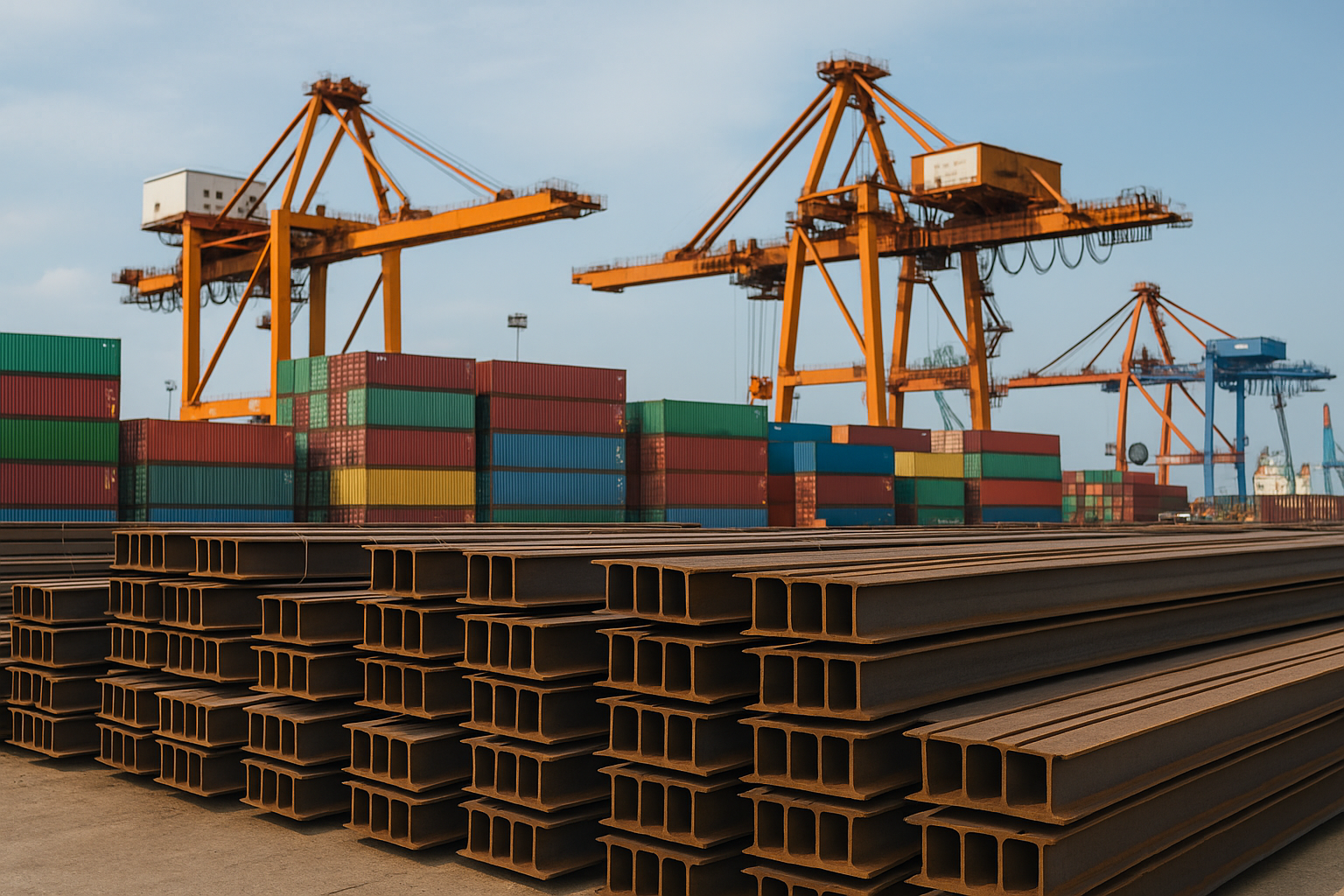
Exporting steel successfully requires more than competitive prices, production capacity, and access to international transportation.
Steel is a specification-driven, capital-intensive industry in which customers frequently require reliable delivery schedules, technical documentation, consistent product quality, and dependable after-sales support. Exporters must also navigate tariffs, trade remedies, customs procedures, financing requirements, and commercial risks that differ across markets.
Strategic partnerships can help steel producers, service centers, trading companies, and industrial suppliers establish a sustainable presence in foreign markets.
However, a partnership does not automatically reduce costs, eliminate regulatory barriers, or guarantee access to customers. Its effectiveness depends on partner selection, contractual responsibilities, financial structure, technical capabilities, and measurable performance.
The objective is not simply to export more steel. It is to build an international commercial structure capable of delivering profitable, compliant, and repeatable transactions.
This guide explains how steel exporters can select markets, evaluate partners, structure agreements, manage risks, and measure results using practical engineering and international trade principles.
Editorial reference date: October 2026. All financial and commercial calculations are hypothetical examples for educational purposes. They are not current market quotations, legal opinions, or representations of actual company transactions.
1. Why Strategic Partnerships Matter in Steel Exports
Steel products are often bulky, heavy, and sensitive to freight costs.
They may also require specialized handling, storage, processing, inspection, and technical support.
International customers commonly evaluate several factors before selecting a supplier:
- Product quality and conformity with technical standards.
- Price competitiveness.
- Consistent availability.
- Delivery reliability.
- Financial and payment conditions.
- Traceability and certification.
- Local technical assistance.
- Ability to resolve claims.
- Compliance with import requirements.
An exporter may have excellent manufacturing capabilities but limited knowledge of a particular foreign market.
A qualified local partner can help address this gap.
Nevertheless, the exporter must maintain sufficient oversight to ensure that commercial growth does not create unacceptable legal, financial, or reputational exposure.
2. What Is a Strategic Export Partnership?
A strategic export partnership is a structured commercial relationship in which independent organizations coordinate resources, capabilities, or market access to pursue defined international business objectives.
Partnerships can be formalized through distribution agreements, agency contracts, processing arrangements, logistics agreements, joint ventures, or other legally appropriate structures.
The correct model depends on the business objective.
A company seeking occasional sales may need a sales agent.
An exporter seeking inventory availability and regional customer coverage may prefer a distributor.
A company entering a market requiring extensive processing or local manufacturing may evaluate a service-center agreement or joint venture.
These structures should not be treated as interchangeable.
3. Main Types of Steel Export Partners
| Partner type | Primary function | Important commercial consideration |
|---|---|---|
| Commercial agent | Introduces customers and facilitates sales | Commission, authority, customer ownership |
| Independent distributor | Purchases and resells steel | Credit exposure, inventory, resale margins |
| Steel service center | Processes coils, sheets, and plates | Yield, tolerances, quality responsibility |
| EPC contractor | Sources steel for engineering and construction projects | Project specifications, delivery milestones |
| Industrial fabricator | Converts steel into components | Technical compatibility and inspection |
| Trading company | Coordinates international purchasing and resale | Contractual counterparty and financial capacity |
| Freight forwarder | Organizes transportation | Service scope, shipment visibility |
| Customs broker | Supports customs formalities | Jurisdiction-specific licensing and responsibility |
| Warehousing operator | Stores and handles material | Damage prevention, inventory controls |
| Joint venture partner | Shares ownership or operations | Governance, capital commitments, exit arrangements |
Government export agencies and industry associations can support market development, but their role differs from that of a commercial buyer or contractual distributor.
4. Commercial Agents Versus Distributors
This distinction is particularly important.
Commercial agent
An agent generally promotes sales or negotiates transactions on behalf of a principal, subject to the applicable agreement and local law.
The exporter may continue selling directly to the final customer.
Potential advantages include lower inventory requirements and direct commercial visibility.
Potential disadvantages include commission costs, limited local stock, and legal obligations arising from agency arrangements.
Distributor
A distributor generally purchases products for resale on its own account.
This can simplify customer coverage and create local inventory availability.
However, the exporter may have less control over resale prices, end customers, inventory management, and market positioning.
Which model is preferable?
The decision should consider:
- Expected annual tonnage.
- Customer concentration.
- Product range.
- Technical service requirements.
- Inventory needs.
- Credit risk.
- Commercial margins.
- Local agency and competition laws.
Neither model is universally superior.
5. Joint Ventures and Local Processing Partnerships
Joint ventures involve deeper commercial integration and may require shared investment, governance, and operational responsibilities.
They can be relevant when a target market requires substantial local processing capacity or long-term infrastructure development.
However, joint ventures introduce risks that are not present in ordinary sales agreements.
These may include shareholder disagreements, governance failures, capital requirements, and difficulties exiting the investment.
Steel processing partnerships
A local steel service center may offer:
- Coil slitting.
- Cut-to-length processing.
- Blanking.
- Surface finishing.
- Packaging.
- Inventory management.
- Technical inspection.
Such partnerships can enable exporters to supply standardized products while meeting specific customer dimensions and delivery schedules.
Quality responsibilities must be clearly allocated, particularly when defects may originate either in the original steel or during downstream processing.
6. Selecting the Right Export Market
Partner selection should begin with market selection.
A capable distributor in an unattractive or inaccessible market may still produce disappointing results.
The initial assessment should examine:
- Apparent steel consumption.
- Import volumes and trends.
- Domestic steel production.
- Product-specific demand.
- Customer industries.
- Competition.
- Import tariffs.
- Trade remedies.
- Freight and inland transportation.
- Currency and payment risks.
- Technical standards.
Use product-specific trade data
Aggregate steel import statistics can be misleading.
Hot-rolled coil, cold-rolled sheet, galvanized products, structural sections, rebar, stainless steel, and specialty alloys serve different markets.
A country importing substantial quantities of steel may still have limited demand for the exporter’s particular grade or product form.
Market research resources
The International Trade Centre provides tools such as Trade Map, Market Access Map, and Export Potential Map.
These can support preliminary screening, but statistical results should be validated against actual buyer requirements and applicable regulations.
For a complementary explanation of price signals, supply conditions, and international market indicators, see Key Indicators for Understanding the Global Steel Market.
7. Segmenting Customers by Industrial Application
Steel exporters should identify the industries that consume their products.
Potential customer groups include:
- Construction and infrastructure.
- Automotive manufacturing.
- Agricultural machinery.
- Heavy equipment.
- Energy infrastructure.
- Shipbuilding.
- Industrial fabrication.
- Appliances.
- Metal packaging.
- Distribution and service centers.
Technical segmentation
Two customers buying the same nominal steel grade may have different requirements.
One may prioritize surface quality and formability.
Another may require dimensional consistency, mechanical properties, weldability, or corrosion resistance.
The export strategy should therefore combine commercial segmentation with technical qualification.
8. Building a Partner Shortlist
A shortlist should include organizations that can realistically serve the intended market.
Potential sources include:
- Industry associations.
- Trade fairs.
- Chambers of commerce.
- Verified company directories.
- Export promotion organizations.
- Referrals from customers and logistics providers.
- Steel service-center networks.
- Public procurement and project information.
A professional website or an extensive contact list does not establish commercial credibility.
Initial outreach should identify the partner’s actual role, market coverage, technical capabilities, and decision-making authority.
9. Conducting Commercial and Financial Due Diligence
Due diligence should occur before granting exclusivity, shipping material on credit, or committing substantial resources.
Corporate verification
Confirm the legal entity, registration details, ownership structure where reasonably available, and authorized representatives.
Financial assessment
Review relevant financial information, credit references, payment history, and the capacity to finance inventory.
Commercial assessment
Examine customer coverage, sales organization, competing product lines, market reputation, and prior experience.
Operational assessment
Where applicable, assess warehouses, lifting equipment, inventory systems, processing facilities, and quality controls.
Integrity and compliance
Screen for relevant sanctions, restricted parties, corruption risks, and material adverse information using lawful, reliable sources.
The OECD’s risk-based due diligence framework provides useful principles for evaluating business relationships and addressing identified risks.
10. A Practical Partner Evaluation Matrix
A weighted matrix can help compare candidates consistently.
Consider the following hypothetical evaluation criteria:
| Criterion | Weight |
|---|---|
| Financial capacity | 25% |
| Customer access | 25% |
| Technical capabilities | 20% |
| Logistics infrastructure | 15% |
| Compliance and governance | 10% |
| Reporting and communication | 5% |
| Total | 100% |
Each candidate can be scored from 1 to 5 against documented evidence.
Illustrative comparison
| Criterion | Weight | Partner A score | Partner B score |
|---|---|---|---|
| Financial capacity | 25% | 4 | 3 |
| Customer access | 25% | 3 | 5 |
| Technical capabilities | 20% | 5 | 3 |
| Logistics infrastructure | 15% | 4 | 4 |
| Compliance and governance | 10% | 5 | 4 |
| Reporting and communication | 5% | 4 | 3 |
Weighted score:
Partner A = 4.05 out of 5
Partner B = 3.75 out of 5
Partner A receives the higher preliminary score.
However, this does not automatically establish that Partner A should be selected.
Mandatory qualification criteria
Certain requirements should operate as pass/fail conditions.
A partner that fails mandatory sanctions screening, legal authorization, or essential technical requirements should not be approved merely because its overall score is high.
11. Technical Qualification of Steel Products
Commercial agreements cannot compensate for unsuitable material specifications.
Before beginning regular shipments, the exporter and its partner should confirm:
- Applicable product standards.
- Steel grade.
- Chemical composition.
- Mechanical properties.
- Dimensions and tolerances.
- Surface condition.
- Coating specifications.
- Packaging requirements.
- Product identification.
- Traceability.
- Inspection documents.
Mill test certificates
Where required, the parties should define the type of inspection document, including any applicable EN 10204 designation.
A mill test certificate should be evaluated for its actual scope and traceability.
It should not be treated as automatic evidence of conformity with every regulatory requirement in the destination market.
Additional technical requirements
Certain markets or applications may require local certification, testing, product registration, or approval.
These requirements must be checked for the actual product and destination.
12. Tariff Classification and Customs Requirements
Tariff classification is a fundamental element of international steel trade.
Classification affects tariff treatment, statistical reporting, licensing, and potentially the application of trade measures.
The Harmonized System provides the international framework, but national tariff subdivisions and regulatory requirements may differ.
Responsibilities
The exporter should provide accurate product descriptions and supporting technical documentation.
The importer and its customs representatives must fulfill the obligations applicable in the importing jurisdiction.
Contractual arrangements can allocate responsibilities between parties, but cannot automatically eliminate obligations imposed by law.
Common classification risks
- Incorrect product dimensions.
- Confusion between coated and uncoated steel.
- Incorrect identification of alloy status.
- Misinterpretation of product form.
- Incomplete chemical composition.
- Incorrect country-of-origin declarations.
Technical verification should precede customs classification decisions.
13. Rules of Origin and Trade Agreements
Country of shipment and country of origin are not necessarily the same.
A steel product may be shipped from a distribution hub while retaining an origin determined by applicable non-preferential origin rules.
Preferential origin under a trade agreement may require separate criteria.
Processing does not automatically change origin
Cutting, slitting, coating, or other operations do not necessarily confer a new origin.
The legal outcome depends on the applicable rules and the specific processing performed.
Contractual documentation
Partners should agree on the documents needed to substantiate origin and on procedures for correcting discrepancies.
Origin claims should never be made solely to obtain favorable tariff treatment without a valid legal basis.
14. Antidumping, Countervailing Duties and Safeguards
Steel is frequently affected by trade defense investigations and measures.
Exporters must distinguish three principal categories.
Antidumping measures
These address imports found to be dumped under the relevant legal framework, subject to applicable injury and procedural requirements.
Countervailing measures
These address certain subsidized imports under the applicable legal framework.
Safeguards
These are measures addressing qualifying import surges and injury conditions, subject to relevant rules and exceptions.
Why partnerships do not remove these measures
A local distributor cannot eliminate an applicable duty simply by purchasing, storing, or reselling the steel.
The correct assessment requires examination of:
- Product scope.
- Country of origin.
- Exporter or producer coverage.
- Effective dates.
- Applicable exclusions.
- Investigation status.
- Official customs and trade-remedy measures.
For additional context on trade-policy developments, see Steel Market & Demand Outlook 2026: Tariffs, CBAM, China and Global Steel Trade.
15. Export Contracts: Essential Commercial Clauses
A written agreement should define the actual responsibilities of each party.
Important subjects include:
- Product scope.
- Territory.
- Customer segments.
- Contract duration.
- Sales targets.
- Pricing mechanism.
- Payment conditions.
- Delivery obligations.
- Technical specifications.
- Inspection and claims.
- Confidentiality.
- Intellectual property.
- Compliance obligations.
- Termination.
- Dispute resolution.
The agreement should also distinguish obligations under the partnership arrangement from those under individual steel sales contracts.
Applicable law
International contracts should identify the governing law and appropriate dispute-resolution mechanism.
Legal review is particularly important where local mandatory laws affect agency termination, competition, distribution, or indemnification.
16. Exclusivity and Minimum Purchase Commitments
Exclusivity can encourage a distributor to invest in customer development and inventory.
However, it can also restrict the exporter’s access to other buyers.
Possible safeguards
An exclusive arrangement may include:
- Defined territory.
- Product-specific scope.
- Minimum purchase targets.
- Performance review periods.
- Conditions for renewal.
- Limited exceptions.
- Termination triggers.
Competition-law considerations
Exclusivity and resale restrictions may be subject to competition laws.
Contractual clauses should be reviewed for the relevant jurisdictions rather than copied from agreements used in other markets.
17. Incoterms® 2020 in Steel Export Operations
Incoterms® 2020 provide standardized rules for allocating certain delivery obligations, costs, and risks between sellers and buyers.
They do not establish every element of an international sales contract.
In particular, they do not determine ownership transfer, payment terms, or the full allocation of regulatory liabilities.
Frequently considered rules
FCA — Free Carrier
Can be suitable for various transport arrangements, including containerized shipments.
FOB — Free on Board
Applies to sea and inland waterway transport and is commonly considered for appropriate port-to-port bulk cargo arrangements.
CFR — Cost and Freight
The seller contracts and pays for carriage to the named destination port, while risk transfers according to the rule at the port of shipment.
CIF — Cost, Insurance and Freight
Includes the seller’s obligation to procure insurance at the coverage level specified by the rule, unless the contract provides otherwise.
DAP — Delivered at Place
Can be considered when the seller agrees to deliver to a named destination under the rule’s allocation of responsibilities.
Important caution
FOB, CFR, and CIF should not be selected automatically for containerized steel cargo merely because transportation involves a ship.
The delivery point and transport arrangement must be compatible with the chosen rule.
Contract wording
Identify the selected rule, named place or port, and version.
For example:
CIF [Named Destination Port], Incoterms® 2020
The final wording should reflect the actual operation.
18. Shipping Steel: Technical and Operational Risks
Steel products require appropriate transport planning.
Common risks
- Corrosion and moisture exposure.
- Mechanical damage.
- Coil deformation.
- Improper lifting.
- Inadequate securing.
- Packaging failure.
- Port congestion.
- Delayed documentation.
Product-specific considerations
Steel coils, plates, long products, and fabricated structures have different handling requirements.
Heavy coils may require specialized securing and lifting arrangements.
Flat products may need protection against water exposure and edge damage.
Cargo insurance
Insurance arrangements should be evaluated against the product, route, exclusions, and insured value.
An Incoterm requiring insurance does not necessarily provide the coverage level the buyer expects for every risk.
19. Warehousing and Local Inventory
Local inventory can reduce customer lead times.
However, it ties up capital and creates storage risks.
Potential benefits
- Faster deliveries.
- Greater responsiveness.
- Support for smaller orders.
- Improved customer service.
Potential costs
- Warehouse rental.
- Handling.
- Insurance.
- Inventory financing.
- Deterioration.
- Obsolescence.
- Stock reconciliation.
Ownership and custody
The agreement should specify who owns the inventory, who bears loss or damage, and how stock discrepancies are resolved.
Consignment inventory requires particularly careful legal, accounting, tax, and insurance treatment.
20. Financial Risk and International Payments
Payment structure is central to export profitability.
Advance payment
Can reduce seller credit exposure but may be commercially difficult for new buyers.
Open account
Can improve customer convenience but exposes the exporter to payment risk.
Documentary collection
Uses banks to handle specified documents but does not provide the same payment undertaking as a compliant documentary credit.
Letter of credit
May provide a bank payment undertaking when documentary requirements and other conditions are satisfied.
It introduces banking costs and documentary compliance requirements.
Credit insurance and guarantees
These instruments may reduce specified risks, subject to coverage terms, exclusions, limits, and counterparty conditions.
Currency risk
Exchange-rate movements can change realized margins.
Exporters should evaluate invoicing currency, payment timing, natural hedges, and appropriate financial hedging arrangements.
21. Quantitative Example: Direct Sales Versus Distribution
Consider a hypothetical exporter selling 1,000 metric tonnes of steel.
Assume the following simplified commercial alternatives.
Option A — Direct export sales
- Net sales revenue: US$850/t.
- Product acquisition or production cost: US$700/t.
- Export logistics and documentation: US$45/t.
- Direct selling and account-management cost: US$35/t.
- Expected credit and claims allowance: US$10/t.
Contribution per tonne:
US$850 − US$700 − US$45 − US$35 − US$10 = US$60/t
Total contribution:
1,000 × US$60 = US$60,000
Option B — Sale to an independent distributor
Assume:
- Net selling price to distributor: US$820/t.
- Product cost: US$700/t.
- Export logistics and documentation: US$45/t.
- Partner-management cost: US$10/t.
- Expected credit and claims allowance: US$8/t.
Contribution per tonne:
US$820 − US$700 − US$45 − US$10 − US$8 = US$57/t
Total contribution:
1,000 × US$57 = US$57,000
Comparison
| Indicator | Direct sales | Distributor |
|---|---|---|
| Volume | 1,000 t | 1,000 t |
| Selling price | US$850/t | US$820/t |
| Contribution per tonne | US$60 | US$57 |
| Total contribution | US$60,000 | US$57,000 |
The direct-sales model generates US$3,000 more contribution under these assumptions.
However, this does not prove that direct sales are preferable.
What could change the result?
A distributor may provide higher volume, lower receivables administration, faster market penetration, or reduced inventory exposure.
Conversely, a distributor may create additional counterparty concentration or reduce market visibility.
The figures are illustrative contribution calculations, not audited profit statements. Tax effects, working capital, fixed costs, and other expenses are excluded.
22. Quantitative Example: Comparing Export Logistics Structures
Consider a hypothetical shipment of 500 tonnes of steel.
Assume:
- Goods value at the relevant origin pricing point: US$400,000.
- Origin handling and export documentation: US$8,000.
- International freight: US$22,000.
- Cargo insurance: US$2,000.
Scenario A — Origin-based commercial arrangement
Goods and specified origin costs:
US$400,000 + US$8,000 = US$408,000
The buyer separately arranges and pays the freight and insurance assumed in this example.
Scenario B — Seller arranges freight and insurance
Illustrative combined cost:
US$400,000 + US$8,000 + US$22,000 + US$2,000 = US$432,000
Comparison
| Cost component | Scenario A | Scenario B |
|---|---|---|
| Goods and origin costs | US$408,000 | US$408,000 |
| Freight arranged by seller | — | US$22,000 |
| Insurance arranged by seller | — | US$2,000 |
| Seller’s illustrative cost base | US$408,000 | US$432,000 |
The US$24,000 difference represents additional costs included in the seller’s modeled scope.
It is not automatically a profit difference.
Important limitation
These scenarios are simplified cost allocations, not complete Incoterms quotations.
Actual obligations, risk-transfer points, insurance requirements, and delivery responsibilities depend on the chosen rule and contract.
Import duties, destination charges, inland transport, taxes, financing, and commercial margins are excluded.
23. Landed Cost and Importer Competitiveness
The importer’s final cost can determine whether an export partnership is commercially viable.
A simplified landed-cost analysis may include:
- Goods price.
- Freight.
- Insurance.
- Port charges.
- Customs clearance.
- Import duties.
- Trade-remedy duties.
- Domestic transportation.
- Financing.
- Other applicable costs and taxes.
Avoid double counting
The calculation must distinguish costs already included in the quoted selling price from costs incurred separately.
Taxes
Certain taxes may be recoverable or treated differently depending on the jurisdiction and importer.
They should not automatically be classified as permanent economic costs.
Commercial implication
A low export price may still produce an uncompetitive delivered cost when freight, duties, or trade measures are significant.
24. Quantitative Example: Partner Selection and Risk Adjustment
Suppose two qualified distributors offer the following hypothetical annual business opportunities:
| Indicator | Partner A | Partner B |
|---|---|---|
| Expected sales volume | 2,000 t | 2,500 t |
| Contribution before expected credit loss | US$45/t | US$40/t |
| Expected annual credit loss | US$8,000 | US$20,000 |
Partner A
2,000 × US$45 = US$90,000
After expected credit loss:
US$90,000 − US$8,000 = US$82,000
Partner B
2,500 × US$40 = US$100,000
After expected credit loss:
US$100,000 − US$20,000 = US$80,000
Interpretation
Partner B offers greater expected tonnage but slightly lower risk-adjusted contribution under the assumptions.
This illustrates why sales volume alone should not determine partner selection.
The model is simplified and does not account for the timing of cash flows, probability distributions, concentration limits, or additional fixed costs.
25. Pilot Shipments Before Long-Term Commitments
A pilot transaction can reveal operational weaknesses before a partnership is expanded.
Pilot objectives
- Confirm product acceptance.
- Test documentation accuracy.
- Validate transportation arrangements.
- Measure delivery performance.
- Evaluate payment behavior.
- Assess claims handling.
- Test communication procedures.
Pilot structure
The parties should define a manageable volume, product range, delivery schedule, and evaluation period.
A pilot should not create an unconditional commitment to future exclusivity.
Acceptance criteria
Success criteria should be agreed before the first shipment.
Otherwise, partners may disagree about whether the pilot achieved its objectives.
26. Managing Quality Claims and Technical Disputes
Steel claims may involve:
- Chemical composition.
- Mechanical properties.
- Dimensional tolerances.
- Coating thickness.
- Surface defects.
- Flatness.
- Corrosion.
- Transit damage.
- Processing defects.
Evidence preservation
A claims procedure should address:
- Product identification.
- Heat and coil numbers.
- Mill test certificates.
- Photographs.
- Inspection reports.
- Storage and handling records.
- Sampling and testing methods.
- Notification deadlines.
Independent inspection
Where appropriate, the parties may appoint a qualified independent inspection organization.
The inspection scope, sampling methodology, standards, and contractual consequences should be defined in advance.
Responsibility allocation
Not every defect observed by a customer originates at the steel mill.
Processing, transportation, storage, and handling may also influence product condition.
A technically credible investigation should distinguish these possibilities.
27. Digital Tools for Export Partnerships
Digital systems can improve coordination across exporters, distributors, logistics providers, and customers.
Potential applications include:
- Customer relationship management.
- Electronic quotation systems.
- Shipment tracking.
- Inventory visibility.
- Document management.
- Technical certificate retrieval.
- Claims registration.
- Sales forecasting.
- Partner performance dashboards.
Data governance
Partners should define access rights, confidentiality obligations, data accuracy requirements, and cybersecurity responsibilities.
Automation limitations
Automated classification, pricing, or compliance tools should be subject to appropriate review.
Errors in technical data can produce significant commercial consequences.
For further discussion, see How Digital Platforms Are Transforming Steel Procurement and Trade in 2026.
28. Measuring Partnership Performance
Performance should be evaluated through indicators that reflect both commercial results and operational reliability.
| KPI | What it measures |
|---|---|
| Sales volume | Tonnes sold during the period |
| Net contribution | Commercial value after defined variable costs |
| Customer acquisition | New qualified customers |
| Repeat purchase rate | Retention of purchasing customers |
| On-time delivery | Delivery performance against agreed dates |
| Claims rate | Quality and service problems |
| Collection performance | Payment reliability |
| Inventory turnover | Efficiency of local stock |
| Forecast accuracy | Quality of demand planning |
| Compliance incidents | Regulatory and contractual issues |
Avoid relying on one KPI
High tonnage can coexist with low margins.
Strong revenue growth can coexist with deteriorating receivables.
A balanced dashboard should combine volume, profitability, customer development, delivery, quality, and risk.
29. Forecasting and Demand Coordination
Forecasting is especially important when steel products have long manufacturing or international shipping lead times.
Collaborative planning
Exporters and distributors can exchange:
- Historical sales.
- Customer forecasts.
- Project pipelines.
- Inventory positions.
- Scheduled shipments.
- Production lead times.
Forecast limitations
Forecasts should distinguish confirmed purchase orders from preliminary customer expectations.
Infrastructure projects may be delayed, canceled, or redesigned.
A demand forecast is not equivalent to a binding purchase commitment.
Commercial safeguards
Contracts should define how forecasts affect capacity reservations, inventory commitments, and cancellation liabilities.
30. Common Reasons Steel Export Partnerships Fail
Poor partner qualification
Commercial enthusiasm substitutes for financial and operational verification.
Undefined responsibilities
The parties disagree about freight, customs, inspections, claims, or customer service.
Excessive exclusivity
The exporter becomes dependent on a partner that does not meet agreed performance levels.
Weak technical documentation
Product specifications are incomplete or inconsistent.
Inadequate payment controls
Sales grow faster than the exporter’s ability to finance receivables.
Regulatory assumptions
The parties rely on informal advice rather than verifying applicable requirements.
Uncompetitive landed costs
Freight, duties, or trade remedies eliminate the apparent price advantage.
Poor communication
Forecasts, inventory records, and customer requirements are not shared accurately.
31. A Step-by-Step Partnership Development Framework
Step 1 — Define the export objective
Specify target products, markets, volumes, customers, and required contribution.
Step 2 — Screen target markets
Evaluate demand, trade barriers, logistics, and commercial risks.
Step 3 — Identify suitable partner models
Determine whether the operation requires an agent, distributor, processor, trading company, or other structure.
Step 4 — Prepare a partner shortlist
Use reliable industry and commercial sources.
Step 5 — Conduct due diligence
Verify corporate, financial, technical, operational, and compliance information.
Step 6 — Validate the product
Confirm specifications, certification, packaging, and import requirements.
Step 7 — Model transaction economics
Calculate relevant selling prices, costs, duties, credit exposure, and contribution.
Step 8 — Negotiate the agreement
Define territory, responsibilities, targets, payment conditions, delivery, claims, and termination.
Step 9 — Conduct a pilot shipment
Test the relationship using agreed acceptance criteria.
Step 10 — Monitor and expand
Scale the partnership only when technical, financial, and commercial performance justify expansion.
32. Frequently Asked Questions
What is the best type of partner for a steel exporter?
There is no universal answer. The appropriate model depends on market coverage, inventory requirements, technical support, financing, and desired control.
Is a distributor better than a commercial agent?
A distributor may offer inventory and resale capabilities. An agent may provide market access with less inventory commitment. Their legal and financial structures differ.
Should a steel exporter grant exclusivity?
Only after evaluating the commercial benefits, legal implications, performance targets, and termination conditions.
Can a local partner eliminate antidumping duties?
No. Applicable trade-remedy measures must be assessed according to the product, origin, producer or exporter coverage, and relevant legal rules.
Does shipping steel through another country change its origin?
Not automatically. Origin is determined under applicable rules, not simply by the shipping route.
Are Incoterms responsible for determining ownership transfer?
No. Incoterms® 2020 address specified delivery obligations, costs, and risks, but do not determine title transfer.
Is FOB appropriate for every steel shipment?
No. FOB is intended for sea and inland waterway transport, and its suitability depends on the delivery and loading arrangements.
What documents should be checked before exporting steel?
The required documentation depends on the transaction and destination. It may include invoices, packing lists, transport documents, origin documentation, inspection certificates, and mill test certificates.
Can an exporter rely entirely on a customs broker?
No. Customs brokers provide important services, but legal obligations remain subject to the applicable jurisdiction and contractual arrangements.
How should an exporter evaluate a distributor’s creditworthiness?
Through appropriate financial statements, credit references, payment history, exposure limits, and other risk-based verification methods.
Can letters of credit eliminate all payment risks?
No. They can provide defined banking payment undertakings, but documentary discrepancies, bank risk, country risk, and other conditions still matter.
Is a pilot shipment necessary?
It is not universally mandatory, but it can be a valuable risk-management step before larger commercial commitments.
What is the most important KPI for an export partnership?
No single KPI is sufficient. Contribution, payment performance, delivery reliability, quality, and customer development should be evaluated together.
Can a steel service center be a strategic export partner?
Yes. Service centers can provide processing, inventory, technical support, and access to local industrial customers.
How can partnerships reduce logistics costs?
Potential mechanisms include shipment consolidation, improved forecasting, efficient storage, and better transport planning. Actual savings must be measured.
What happens if a distributor fails to meet sales targets?
The outcome depends on the contract and applicable law. Agreements should define performance review and appropriate corrective or termination mechanisms.
What is the first step in entering a new steel export market?
Define the product and customer requirements, then assess demand, regulatory access, competition, logistics, and transaction economics before committing to a partner.
33. Conclusion
Strategic partnerships can provide steel exporters with access to customers, local technical capabilities, inventory infrastructure, and valuable market knowledge.
However, successful partnerships require more than relationships and sales forecasts.
They depend on disciplined market selection, qualified counterparties, technically suitable products, clear contracts, compliant trade procedures, sustainable transaction economics, and measurable operational performance.
Commercial agents, distributors, service centers, logistics providers, and joint ventures each serve different strategic purposes.
The best structure is the one that supports the exporter’s objectives while maintaining acceptable control over quality, financial exposure, customer relationships, and regulatory obligations.
In international steel trade, sustainable growth comes from combining competitive products with reliable execution, documented compliance, and commercially accountable partnerships.
34. Technical References
- International Chamber of Commerce — Incoterms® 2020 Questions and Answers. Scope, delivery obligations, risk allocation, and limitations of Incoterms rules.
- World Trade Organization — Anti-Dumping, Subsidies and Safeguards. Overview of international trade-remedy disciplines.
- World Trade Organization — Safeguards Gateway. Safeguard agreements, procedures, and official resources.
- International Trade Centre — Market Analysis Tools. Trade statistics, market-access analysis, and export opportunity assessment.
- International Trade Centre — Export Potential Map. Methodology-based market and product opportunity analysis.
- OECD — Due Diligence Guidance for Responsible Business Conduct. Risk-based business due diligence principles.
- International Chamber of Commerce — ICC Digital Library. International commercial practice and trade documentation resources.
- World Customs Organization — Official Website. Customs cooperation and Harmonized System resources.
- International Trade Administration — Official Website. International trade guidance and market research resources.
- World Steel Association — Official Website. Steel industry statistics, technical publications, and sustainability resources.
Editorial note: This article provides general educational information. Trade remedies, tariffs, origin rules, banking arrangements, agency laws, and contractual obligations must be verified for the actual product, jurisdiction, transaction, and effective date. The illustrative financial examples do not represent current steel market prices or actual company performance.