
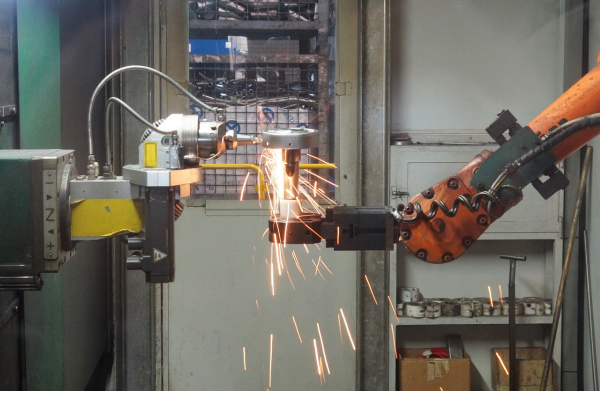
Selecting the right steel for an industrial application is rarely as simple as choosing the strongest material available, the lowest price per ton, or the steel grade traditionally used by the company.
In practice, steel selection is a multidisciplinary engineering decision.
A component may require high yield strength but also sufficient elongation for forming. Another may require excellent fatigue performance. A part exposed to abrasive materials may depend primarily on hardness and wear resistance, while another operating under impact loads may require high toughness.
Surface quality, corrosion resistance, weldability, dimensional tolerances, manufacturing equipment, supplier capability, availability, and total cost can be just as important as mechanical strength.
This leads to one of the most important principles in industrial material selection:
The correct steel grade is not necessarily the strongest, cheapest, or most sophisticated steel. It is the grade that provides the required combination of performance, manufacturability, availability, and total cost for the specific application.
Therefore, steel selection should begin with the finished product and its operating conditions — not with the steel catalog.
This article presents a practical methodology for evaluating steel grades for industrial applications, particularly in steel-consuming manufacturing companies.
The objective is not to recommend one universal steel family.
The objective is to establish a structured engineering process that helps companies answer a much more valuable question:
What properties does this product actually require from the steel?
1. Steel Selection Should Begin With the Application
A common industrial mistake is to start material selection by asking:
“Which steel grade should we use?”
A better sequence is:
Product → Function → Loads → Failure Modes → Manufacturing Process → Required Properties → Steel Family → Candidate Grade → Industrial Validation
This distinction is fundamental.
Consider several different steel applications:
- A road trailer chassis must support structural loads and cyclic service conditions while allowing fabrication and welding.
- A stamped automotive component may require a specific balance between strength and formability.
- A loader bucket exposed to rocks may require high abrasion resistance combined with adequate toughness.
- A steel cabinet may require excellent surface quality, bending capability, dimensional consistency, and coating performance.
- An agricultural component may experience impact, vibration, fatigue, soil abrasion, and severe field conditions.
- A structural profile may be controlled by strength, stiffness, buckling, geometry, fabrication, and design requirements.
All of these products use steel.
But they do not require the same steel properties.
The engineering problem must therefore be defined before the material is selected.
2. Do Not Start With the Historical Steel Specification
Many industrial steel specifications remain unchanged for years.
Sometimes this is justified.
Sometimes it is simply historical.
A drawing may specify a particular grade because:
- it was available when the product was originally designed;
- the original supplier recommended it;
- purchasing standardized the material;
- manufacturing already knew how to process it;
- no one had experienced a serious failure;
- changing the specification would require additional work;
- the engineering team never formally reviewed the application.
This creates an important question:
Is the current steel specification technically optimized, or has it simply become a company tradition?
The existing grade should always be considered the baseline, not automatically the optimum solution.
3. Define the Component’s Real Function
Before comparing steel grades, engineering should document what the component must actually accomplish.
Questions may include:
- What loads does the component support?
- Are loads static, dynamic, cyclic, or impact-related?
- Is fatigue relevant?
- Is the component exposed to abrasion?
- Is corrosion important?
- Will the part be bent, stamped, deep drawn, rolled, machined, or welded?
- Are there critical dimensional tolerances?
- Is surface appearance important?
- Does the component operate at high or low temperature?
- Is stiffness more important than strength?
- Could buckling govern the design?
- Is the component safety-critical?
- What is the expected service life?
- What are the known failure modes?
- What regulatory, customer, or industry standards apply?
This stage changes the conversation from:
“Which steel is better?”
to:
“Which material properties are required to make this particular component perform reliably?”
4. There Is No Single Mechanical Property That Defines the Best Steel
Industrial material discussions frequently focus heavily on tensile strength.
But selecting steel based on a single mechanical property can be misleading.
Depending on the application, the governing property may be:
- yield strength;
- elongation;
- hardness;
- toughness;
- fatigue performance;
- formability;
- bendability;
- abrasion resistance;
- corrosion resistance;
- stiffness;
- surface characteristics;
- dimensional stability;
- temperature resistance.
Therefore:
There is no single mechanical property that defines the “best steel.” The dominant property depends on how the component fails, deforms, wears, corrodes, or is manufactured.
This is the foundation of application-based steel selection.
5. Yield Strength: A Critical Property for Many Structural Applications
For many industrial components, yield strength is one of the first mechanical properties engineers should evaluate.
Yield strength indicates the stress level at which permanent plastic deformation begins under the applicable test definition.
For components where permanent deformation must be avoided, it can be more directly relevant to design decisions than ultimate tensile strength alone.
Higher yield strength may create opportunities to:
- reduce thickness;
- reduce component mass;
- increase load capacity;
- redesign structural sections;
- reduce steel consumption;
- improve payload;
- reduce transportation weight.
However, higher yield strength does not automatically mean that thickness can be reduced proportionally.
Other design constraints may govern the component.
6. Elongation Must Be Considered Together With Strength
Increasing strength frequently changes forming behavior.
For this reason, yield strength should not be evaluated in isolation.
Elongation provides important information about the material’s ability to undergo plastic deformation before fracture under the specified tensile-test conditions.
For manufacturers, this becomes particularly important in:
- stamping;
- bending;
- roll forming;
- profiling;
- drawing;
- flanging;
- complex formed components.
Engineering teams evaluating stronger steels should therefore consider the required combination of:
Yield Strength + Elongation + Formability + Manufacturing Process
A theoretically stronger material that cannot be reliably manufactured in the existing process may not be an economically viable solution.
7. Tensile Strength Is Important — But It Is Not the Only Selection Criterion
Ultimate tensile strength remains an important material characteristic.
It helps engineers understand the material’s behavior as loading progresses beyond yielding and contributes to the overall characterization of the steel.
However, industrial material selection should not simply rank candidate steels by tensile strength.
For many applications, engineers need to evaluate the complete mechanical-property profile, including the relationship among:
- yield strength;
- tensile strength;
- elongation;
- hardness;
- toughness;
- fatigue;
- forming behavior.
The relative importance of each depends on the component.
8. Stiffness and Strength Are Different Engineering Concepts
One of the most important considerations when reducing steel thickness is that higher yield strength does not mean proportionally higher elastic stiffness.
For conventional steels, Young’s modulus remains broadly similar across many grades.
Consequently, replacing a lower-strength steel with a higher-strength steel and reducing thickness may maintain adequate resistance against yielding while creating problems related to:
- excessive deflection;
- vibration;
- local instability;
- panel stiffness;
- buckling;
- noise;
- perceived product rigidity.
This is particularly relevant for:
- large panels;
- long structural members;
- cabinets;
- agricultural equipment;
- trailers;
- profiles;
- enclosures.
Therefore, a lightweighting project must validate both strength and stiffness.
9. Fatigue Can Govern the Application
Many industrial components do not fail because a single load exceeds the material’s static strength.
They fail after thousands or millions of loading cycles.
Examples include:
- trailer chassis;
- agricultural machinery;
- vehicle components;
- brackets;
- welded structures;
- vibrating equipment.
In these applications, fatigue performance becomes critical.
The analysis must consider not only the steel grade but also:
- geometry;
- stress concentration;
- weld quality;
- holes;
- edges;
- residual stresses;
- surface condition;
- load spectrum;
- fabrication history.
Simply specifying a higher-strength steel does not automatically solve a fatigue problem.
The finished component must be validated.
10. Formability Can Be More Important Than Maximum Strength
For stamped and formed components, material selection should begin with the deformation demanded by the manufacturing process.
A candidate steel may provide excellent strength but create:
- cracking;
- edge fractures;
- excessive springback;
- dimensional variation;
- tooling problems;
- increased press force;
- reduced process robustness.
Relevant properties and characteristics may include:
- elongation;
- work-hardening behavior;
- anisotropy;
- bendability;
- edge formability;
- surface quality;
- thickness tolerance.
For complex parts, forming simulation and industrial trials may be necessary before material approval.
11. Weldability Must Be Evaluated Before Changing the Steel
A steel substitution may alter welding requirements.
Depending on the grade, thickness and process, engineering may need to review:
- chemical composition;
- carbon equivalent;
- heat input;
- preheating requirements;
- filler metal;
- cooling rate;
- heat-affected zone behavior;
- joint design;
- welding sequence;
- hardness;
- risk of cracking.
This is particularly important when moving from conventional steels to higher-strength grades.
The correct question is not:
“Can this steel be welded?”
It is:
Can this steel be welded reliably using the company’s actual manufacturing process while maintaining the required properties of the finished assembly?
12. Abrasion Changes the Steel-Selection Logic
Not every application should be optimized primarily around yield strength.
Consider components exposed to highly abrasive materials:
- loader buckets;
- mining equipment;
- dump bodies;
- chutes;
- liners;
- agricultural equipment;
- earthmoving equipment;
- material-handling systems.
In these applications, material loss caused by abrasive particles may determine service life.
A conventional structural steel selected primarily by yield strength may not provide adequate wear resistance.
The dominant material requirement may instead become:
Hardness + Abrasion Resistance + Toughness
This is an important example of why steel selection must begin with the failure mechanism.
13. Hard Surface and Tough Core: An Important Engineering Concept
Some industrial components benefit from a combination of different properties between the surface and the core.
The desired behavior may be:
| Region | Desired Property | Engineering Function |
|---|---|---|
| Surface | High hardness | Resist wear |
| Surface | High abrasion resistance | Reduce material loss |
| Core | Higher ductility | Accommodate deformation |
| Core | High toughness | Absorb impact and resist fracture |
This combination can be produced in appropriate steel systems through processes such as case hardening, carburizing, carbonitriding, induction hardening, or other metallurgical routes depending on the component.
Typical applications may include:
- gears;
- shafts;
- pins;
- machine components;
- agricultural components;
- wear-loaded mechanical parts.
The engineering objective is straightforward:
The surface resists wear while the core provides the toughness necessary to support the component.
14. Surface-Hardened Steel and Abrasion-Resistant Plate Are Not Necessarily the Same Solution
An important distinction must be made.
A component with a hardened surface and tougher core should not automatically be treated as equivalent to a commercially produced abrasion-resistant plate.
Abrasion-resistant steel plate may obtain its properties through carefully controlled:
- chemical composition;
- rolling;
- quenching;
- tempering;
- microstructural development.
Depending on the product, hardness and mechanical characteristics can extend through a substantial portion of the thickness rather than being restricted to a thin hardened surface layer.
Therefore:
Surface-hardened steel and through-hardened abrasion-resistant plate are not necessarily the same engineering solution.
The selection depends on component geometry, wear mechanism, impact, fabrication, thickness, welding, forming requirements and expected service life.
15. Toughness Becomes Critical Under Impact Loading
Hardness is valuable for wear resistance.
But excessive hardness without adequate toughness can increase susceptibility to brittle fracture under severe impact conditions.
Consider a loader bucket receiving falling rocks.
The steel must resist abrasive sliding and contact, but the component must also withstand repeated impact.
This creates a material-selection balance between:
Wear Resistance ↔ Hardness ↔ Toughness ↔ Fabricability
The optimum steel is therefore not automatically the hardest available material.
It is the steel that provides adequate service life while remaining sufficiently tough and manufacturable for the application.
16. Corrosion Resistance May Control Material Selection
In other applications, mechanical strength may not be the primary concern.
Exposure conditions may dominate.
Examples include:
- outdoor structures;
- humid environments;
- chemical processing;
- food equipment;
- coastal environments;
- water exposure;
- corrosive industrial atmospheres.
Possible strategies include:
- metallic-coated carbon steels;
- galvanized steels;
- Zn-Al or Zn-Al-Mg coated products;
- weathering steels;
- stainless steels;
- coating systems;
- combinations of material and surface protection.
Again, material selection must reflect the actual failure mechanism.
Using a stronger carbon steel may provide little benefit if corrosion determines product life.
17. Surface Quality Can Be a Functional Requirement
Surface condition is sometimes treated as a cosmetic specification.
In many products it is functional.
Examples include:
- exposed automotive parts;
- appliances;
- steel furniture;
- painted components;
- coated products;
- visible architectural applications.
Surface characteristics can influence:
- paint quality;
- coating adhesion;
- appearance;
- forming;
- defect rejection;
- customer acceptance.
A cheaper steel with inadequate surface quality can increase total manufacturing cost through rework, scrap and customer complaints.
18. Thickness Is Part of Material Selection
Steel grade and thickness should not always be evaluated separately.
A higher-strength steel may allow thickness reduction, but the opportunity must be validated against:
- yielding;
- stiffness;
- buckling;
- fatigue;
- forming;
- welding;
- impact;
- vibration;
- corrosion allowance;
- dimensional stability;
- fastening;
- manufacturing capability.
This connects steel selection directly with another important industrial optimization opportunity: thickness tolerance management.
A company may discover that the optimum solution is not merely a different steel grade.
It may be a combination of:
Grade + Thickness + Tolerance + Process Capability + Supplier Control
19. Start With Steel Families — Then Move to Specific Grades
At the initial screening stage, it is useful to evaluate steel families before comparing individual commercial grades.
Depending on the application, candidate families may include:
Low-Carbon Steels
Often appropriate when priorities include:
- excellent formability;
- weldability;
- availability;
- simple fabrication;
- competitive cost.
There is nothing inherently inefficient about low-carbon steel.
It becomes inefficient only when the application could economically benefit from different properties.
HSLA Steels
High-strength low-alloy steels may provide useful combinations of:
- increased yield strength;
- reasonable formability;
- weldability;
- weight-reduction potential.
They are widely relevant to structural and transportation applications.
Advanced High-Strength Steels
AHSS families can provide combinations of strength and formability particularly valuable in automotive and other engineered applications.
However, their selection requires careful consideration of the specific grade, forming process and joining technology.
Structural Steels
Structural grades are selected according to applicable design standards, mechanical requirements, toughness, weldability and fabrication needs.
Abrasion-Resistant Steels
These materials are engineered for applications where wear and abrasion strongly influence service life.
Surface-Hardenable Steels
Appropriate compositions and heat-treatment processes can be used when the component requires a hard, wear-resistant surface combined with a tougher core.
Coated Steels
Metallic coatings can provide corrosion protection while retaining the processing and structural advantages of the steel substrate.
Stainless Steels
Where corrosion, hygiene, temperature or specific service environments dominate, stainless steel may become the appropriate technical solution despite its higher initial material price.
The purpose of this classification is screening, not final specification.
20. Build an Application-to-Property Matrix
A practical engineering team can begin material selection using a matrix such as the following:
| Industrial Application | Dominant Requirement | Properties to Evaluate | Typical Steel Families to Investigate | Required Validation |
|---|---|---|---|---|
| Road trailer chassis | Structural efficiency + fatigue | Yield strength, elongation, fatigue, weldability | Structural / HSLA | Structural, welding, fatigue |
| Agricultural machinery | Strength + impact + field durability | Yield strength, elongation, toughness, wear | Structural / HSLA / wear-resistant | Forming, welding, field tests |
| Automotive stamped parts | Strength + formability | Yield strength, elongation, forming behavior | Low-carbon / HSLA / AHSS | Stamping, springback, joining |
| Steel furniture | Formability + stiffness + surface | Yield strength, elongation, surface, coating | Low-carbon / HSLA / coated | Bending, welding, painting |
| Structural profiles | Strength + stability | Yield strength, elongation, stiffness, buckling | Structural / HSLA | Forming, welding, structural |
| Loader bucket | Abrasion + impact | Hardness, wear resistance, toughness | Abrasion-resistant steels | Wear, impact, welding |
| Gear or wear-loaded pin | Surface wear + core integrity | Surface hardness, core toughness, fatigue | Hardenable steels | Heat treatment, hardness profile, fatigue |
| General metalworking | Application-specific | Defined from component function | Multiple possibilities | Process + finished-product validation |
This table should not be interpreted as a specification.
It is a decision framework.
21. Stage 1 — Document the Current Material
For each component under review, record:
- current steel grade;
- applicable standard;
- thickness;
- tolerance;
- coating;
- mechanical properties;
- chemical requirements;
- supplier;
- annual consumption;
- purchase price;
- current processing route;
- scrap rate;
- known manufacturing problems;
- known field failures.
The objective is to establish the baseline.
Without a baseline, optimization cannot be quantified.
22. Stage 2 — Define the Required Product Performance
Next, separate what the product requires from what the current steel provides.
This is a critical distinction.
For example:
| Parameter | Current Steel Provides | Product Actually Requires | Gap / Opportunity |
|---|---|---|---|
| Yield strength | To be measured | Design requirement | Evaluate |
| Elongation | Certificate value | Forming requirement | Evaluate |
| Thickness | Current nominal | Functional requirement | Evaluate |
| Surface | Current specification | Customer requirement | Evaluate |
| Corrosion protection | Current coating | Service requirement | Evaluate |
This exercise can reveal both over-specification and under-specification.
23. Stage 3 — Identify the Dominant Failure and Manufacturing Mechanisms
Ask:
What could make this product fail technically or economically?
Possible answers include:
- yielding;
- fracture;
- fatigue;
- buckling;
- excessive deflection;
- abrasive wear;
- corrosion;
- cracking during forming;
- welding failure;
- dimensional instability;
- coating failure;
- excessive manufacturing scrap.
Then ask:
What material characteristics influence those mechanisms?
This creates the engineering bridge between product behavior and steel selection.
24. Stage 4 — Identify Candidate Steel Families
Only after defining the application should the team investigate alternative steels.
The first screening may compare:
- conventional low-carbon steel;
- HSLA;
- AHSS;
- structural grades;
- coated steels;
- abrasion-resistant grades;
- hardenable steels;
- stainless steels;
- other application-specific products.
At this stage, avoid prematurely selecting a commercial grade.
First determine which material families have the right property profile.
25. Stage 5 — Compare Candidate Grades Using Technical Data
Once candidate families have been selected, engineers can consult:
- steel mill technical datasheets;
- international standards;
- national standards;
- supplier documentation;
- certificates;
- forming data;
- welding recommendations;
- application guidelines.
A comparison table may include:
| Parameter | Current Steel | Candidate A | Candidate B |
|---|---|---|---|
| Yield strength | — | — | — |
| Tensile strength | — | — | — |
| Elongation | — | — | — |
| Hardness, if relevant | — | — | — |
| Thickness range | — | — | — |
| Coating | — | — | — |
| Formability | — | — | — |
| Weldability | — | — | — |
| Availability | — | — | — |
| Price / ton | — | — | — |
Values should be obtained from the applicable standard or manufacturer’s technical documentation for the exact grade and thickness range under evaluation.
26. Do Not Assume International Grades Are Automatically Equivalent
A common sourcing mistake is assuming that two steels are equivalent because their ASTM, EN, JIS, GB, ISO or other designations appear similar.
True equivalence requires comparing the applicable requirements, including where relevant:
- chemical composition;
- yield strength;
- tensile strength;
- elongation;
- thickness-dependent requirements;
- tolerances;
- impact requirements;
- surface condition;
- coating;
- testing methods;
- delivery condition;
- heat treatment.
The correct question is not:
“What is the Chinese equivalent of this ASTM grade?”
It is:
Does this candidate material meet the technical requirements of the application and the applicable specification?
This is particularly important in international steel procurement.
27. Stage 6 — Evaluate Manufacturing Compatibility
A steel may look excellent on a datasheet and still create problems on the factory floor.
Before approval, review compatibility with:
- press capacity;
- tooling;
- dies;
- roll-forming equipment;
- bending radius;
- laser cutting;
- punching;
- machining;
- welding;
- fastening;
- painting;
- coating;
- handling.
A stronger steel may require changes in:
- press force;
- springback compensation;
- tooling geometry;
- welding parameters;
- cutting conditions;
- consumables.
The steel must fit the manufacturing system — or the business case must include the cost of modifying that system.
28. Stage 7 — Evaluate the Finished Product
Material certificates are necessary.
They are not sufficient.
The finished component or assembly should be validated according to the actual application.
Depending on the product, validation may include:
- dimensional inspection;
- bending;
- forming;
- tensile tests;
- hardness tests;
- fatigue;
- impact;
- corrosion;
- wear;
- vibration;
- load tests;
- weld inspection;
- field trials.
This is where material engineering meets product engineering.
The steel grade is not the final product. The manufactured component is.
29. Stage 8 — Calculate Total Cost, Not Only Price per Ton
A higher-performance steel may cost more per ton and still reduce total product cost.
The business case should evaluate:
Total Material Cost
plus:
- steel consumption;
- component weight;
- scrap;
- cutting yield;
- forming cost;
- welding;
- consumables;
- processing time;
- painting or coating;
- transportation;
- inventory;
- handling;
- warranty;
- maintenance;
- product life.
For example, suppose an alternative steel costs more per ton but allows a validated thickness reduction.
The company may purchase fewer kilograms per finished product.
Therefore:
The lowest price per ton does not necessarily produce the lowest cost per finished product.
This principle should guide engineering and procurement together.
30. Consider Availability and Supplier Capability
A technically ideal steel that cannot be purchased reliably may create operational problems.
Evaluate:
- minimum order quantity;
- standard production dimensions;
- coil width;
- sheet size;
- lead time;
- regional availability;
- service-center availability;
- processing capability;
- certificates;
- lot traceability;
- consistency;
- technical support.
For some consumption volumes, direct mill supply may be attractive.
For smaller or more variable requirements, distributors and service centers may provide greater flexibility.
Material selection and sourcing strategy should therefore be evaluated together.
31. A Practical Steel-Selection Scorecard
Companies can create a weighted decision matrix.
Example:
| Criterion | Weight | Current Steel | Candidate A | Candidate B |
|---|---|---|---|---|
| Product performance | 25% | — | — | — |
| Formability | 15% | — | — | — |
| Weldability | 10% | — | — | — |
| Weight-reduction potential | 10% | — | — | — |
| Material cost | 10% | — | — | — |
| Manufacturing cost | 10% | — | — | — |
| Availability | 10% | — | — | — |
| Supplier capability | 5% | — | — | — |
| Logistics | 5% | — | — | — |
Weights should be adapted to the application.
For a wear component, abrasion resistance might receive the highest weight.
For a stamped component, formability may dominate.
For a structural product, yield strength, stability and fatigue may receive greater emphasis.
The scoring system should reflect the product — not corporate habit.
32. Industrial Application Example — Road Trailers
Consider a structural member currently produced using a conventional structural steel.
The optimization study could follow this sequence:
Current condition
- Current grade: to be documented
- Current yield strength: from applicable specification
- Current thickness: measured
- Component weight: measured/calculated
- Manufacturing route: documented
Candidate condition
- Higher-yield-strength grade: selected for study
- Candidate thickness: engineering calculation
- Required elongation: verified
- Welding: validated
- Fatigue: validated
- Buckling and stiffness: checked
- Prototype: produced
- Road/structural testing: completed
Only after these steps should the candidate material be approved.
Potential benefits may include:
- reduced steel consumption;
- lower tare weight;
- increased payload potential;
- lower material handling;
- reduced transportation mass.
The magnitude of the benefit must be calculated for the specific product.
33. Industrial Application Example — Steel Furniture
A steel cabinet, shelf or furniture frame may not need extremely high strength.
The optimization opportunity may instead involve:
- thickness;
- stiffness;
- bending;
- surface quality;
- welding;
- coating;
- dimensional consistency.
A candidate higher-yield-strength steel could potentially permit thickness reduction, but the designer must evaluate panel stiffness and perceived rigidity.
A thinner panel that does not yield but vibrates excessively or feels unstable is not an optimized product.
This illustrates why yield strength alone cannot determine thickness.
34. Industrial Application Example — Agricultural Machinery
Agricultural equipment operates under demanding conditions.
Components may experience:
- impact;
- vibration;
- cyclic loads;
- soil abrasion;
- mud;
- corrosion;
- field repairs;
- variable operating loads.
Different parts of the same machine may therefore require completely different steels.
A structural frame may prioritize yield strength and fatigue.
A wear component may prioritize hardness and abrasion resistance.
A formed cover may prioritize formability and surface protection.
A pin may require wear resistance combined with a tough core.
The correct solution is not:
“Which steel should this machine use?”
It is:
“Which steel should each functional component use?”
35. Industrial Application Example — Automotive and Stamped Parts
Stamped automotive components demonstrate the importance of balancing mechanical performance and manufacturing behavior.
A candidate material may offer increased strength but also:
- greater springback;
- lower formability;
- increased edge-cracking sensitivity;
- higher press forces;
- different welding behavior.
Therefore, optimization should include:
Material Properties → Forming Simulation → Tooling Evaluation → Prototype → Dimensional Validation → Joining Validation → Component Testing
The objective is not maximum strength.
It is maximum system performance.
36. Industrial Application Example — Abrasion and Impact
Consider a component handling rock or another abrasive material.
The existing steel may experience rapid thickness loss.
Simply increasing plate thickness may extend service life but also increases:
- weight;
- steel consumption;
- handling;
- structural load.
An alternative study could evaluate abrasion-resistant steel.
The comparison should include:
- hardness;
- toughness;
- wear mechanism;
- impact;
- plate thickness;
- weldability;
- bending;
- repairability;
- service life;
- cost per operating hour.
In this case, cost per ton is particularly misleading.
A more expensive wear-resistant steel may be economically attractive if it significantly increases service life and reduces downtime.
The correct KPI may become:
Steel cost per operating hour
rather than steel price per ton.
37. Common Mistake: Selecting Steel Only by Price
Purchasing teams naturally monitor price.
But material price is only one part of industrial cost.
A lower-priced steel can create:
- higher scrap;
- more rework;
- dimensional problems;
- welding difficulties;
- greater product weight;
- increased inventory;
- shorter product life;
- more warranty claims.
Therefore, purchasing should participate in material selection — but should not make the decision using price alone.
38. Common Mistake: Selecting Steel Only by Strength
The opposite mistake also occurs.
Engineering may assume:
Higher strength = better steel
This is equally dangerous.
Higher strength may introduce:
- lower formability;
- increased springback;
- different welding requirements;
- higher material price;
- greater sensitivity to processing conditions;
- unnecessary performance.
The best steel is not the material with the highest number on the datasheet.
It is the material that produces the optimum finished product.
39. Common Mistake: Ignoring the Manufacturing Process
A material change made exclusively at the drawing or purchasing level can fail during production.
Operators, process engineers, quality personnel and tooling specialists often possess critical information about:
- bending limits;
- press behavior;
- springback;
- welding stability;
- tool wear;
- cutting conditions;
- surface defects.
Steel optimization should therefore be cross-functional.
40. Create a Formal Material-Change Procedure
Companies that regularly optimize steel should establish an internal procedure.
A typical workflow may include:
- Identify opportunity.
- Document current material.
- Define component requirements.
- Identify dominant failure mechanisms.
- Screen steel families.
- Select candidate grades.
- Compare technical properties.
- Evaluate standards.
- Assess manufacturing compatibility.
- Analyze suppliers.
- Calculate total cost.
- Produce prototypes.
- Conduct industrial trials.
- Validate finished product.
- Approve engineering change.
- Update drawings and specifications.
- Train production and purchasing.
- Monitor post-implementation performance.
This transforms steel selection from an occasional purchasing decision into an engineering management process.
41. Engineering, Purchasing, Production and Quality Must Work Together
Successful steel optimization is multidisciplinary.
Engineering
Defines functional requirements and validates the product.
Purchasing
Evaluates availability, price, suppliers, minimum quantities and commercial conditions.
Production
Confirms manufacturing feasibility.
Quality
Establishes inspection criteria, traceability and approval requirements.
Suppliers
Provide technical data, samples, process recommendations and material consistency.
Finance / Controlling
Validates the economic result.
When these functions work independently, material-change projects become risky.
When they work together, steel becomes a strategic engineering variable.
42. Document the Final Technical Specification
After approval, the company should document more than the steel grade name.
Depending on the application, the specification may define:
- applicable standard;
- steel grade;
- yield-strength requirement;
- tensile-strength requirement where relevant;
- elongation requirement;
- hardness where relevant;
- toughness where relevant;
- chemical requirements;
- thickness;
- thickness tolerance;
- width and length;
- flatness;
- surface;
- coating;
- delivery condition;
- certificates;
- traceability;
- inspection requirements.
The specification should communicate what the application actually needs.
43. Monitor the Material After Implementation
Approval is not the end of the project.
Monitor:
- steel consumption per product;
- scrap;
- forming defects;
- welding problems;
- dimensional variation;
- supplier consistency;
- customer complaints;
- field failures;
- product weight;
- manufacturing cost;
- total cost.
If expected results are not achieved, investigate the cause.
Continuous monitoring turns material optimization into a controlled industrial process.
44. From Steel Selection to Material Strategy
Once companies apply this methodology across multiple products, a broader opportunity appears.
Instead of optimizing isolated components, the organization can create a steel portfolio strategy.
It may identify:
- redundant grades;
- unnecessary specifications;
- opportunities for standardization;
- opportunities for higher-strength steels;
- opportunities for wear-resistant steels;
- coating optimization;
- thickness optimization;
- supplier consolidation;
- purchasing-volume concentration;
- inventory reduction.
The result can be a smaller, better-defined and more technically appropriate steel portfolio.
This connects material engineering directly with:
- procurement;
- inventory;
- manufacturing;
- logistics;
- cost reduction;
- product development.
45. Frequently Asked Questions
Is high-strength steel always better than low-carbon steel?
No. Low-carbon steel may be the optimum material when formability, weldability, availability and cost dominate. Higher-strength steel should be selected only when its properties create a validated technical or economic advantage.
Is yield strength the most important property?
It is particularly important in many structural and lightweighting applications, but not universally. Wear applications may be controlled by hardness and abrasion resistance; impact applications by toughness; formed parts by formability and elongation; corrosion-sensitive applications by environmental resistance.
Can a higher-strength steel always allow a thinner component?
No. Thickness may be governed by stiffness, buckling, fatigue, impact, corrosion, geometry, manufacturing or other requirements. Engineering validation is necessary.
Why is elongation important?
Elongation contributes to understanding the material’s ductility under the specified tensile-test conditions and is particularly relevant when components require significant plastic deformation. It should be evaluated together with the actual forming requirements.
Are abrasion-resistant steels simply surface-hardened steels?
Not necessarily. Commercial abrasion-resistant plates may develop their properties through composition, rolling and heat treatment through a substantial portion of their thickness. Surface-hardening processes represent a different metallurgical approach and may be appropriate for other components.
Should steel be selected based on price per ton?
No. Price per ton should be one input. The better metric is usually total cost per approved finished product, or another application-specific KPI such as cost per operating hour.
Can two steels from different international standards be considered equivalent?
Only after technical comparison. Similar designations do not prove equivalence. Chemical composition, mechanical properties, tolerances, testing, delivery conditions and application requirements must be reviewed.
Should industrial trials always be performed?
The level of validation depends on the risk and application. For meaningful material changes, especially structural, safety-critical, wear, fatigue or complex-forming applications, industrial trials and appropriate product validation are strongly recommended.
Conclusion: Select the Steel From the Product Backward
Steel selection should not begin with a supplier catalog.
It should begin with the product.
Engineers must understand:
What must the component do?
How can it fail?
How will it be manufactured?
Which properties actually control performance?
Only then should the company determine which steel family and grade deserve evaluation.
For some applications, conventional low-carbon steel will remain the best solution.
For others, HSLA or advanced high-strength steels may allow significant weight and material optimization.
In abrasive environments, hardness and wear resistance may dominate.
For impact-loaded components, toughness becomes critical.
For formed parts, elongation and formability may control the decision.
For corrosive environments, surface protection or corrosion-resistant steel may determine service life.
And in every case, manufacturing capability, supplier reliability, availability and total cost must be included in the decision.
The most effective steel-selection strategy can therefore be summarized in one principle:
Do not select the product around the steel that is available. Define what the product needs — and then select and validate the steel that delivers those requirements with the best overall industrial result.
That is how steel selection moves from a purchasing specification to an engineering and business optimization strategy.